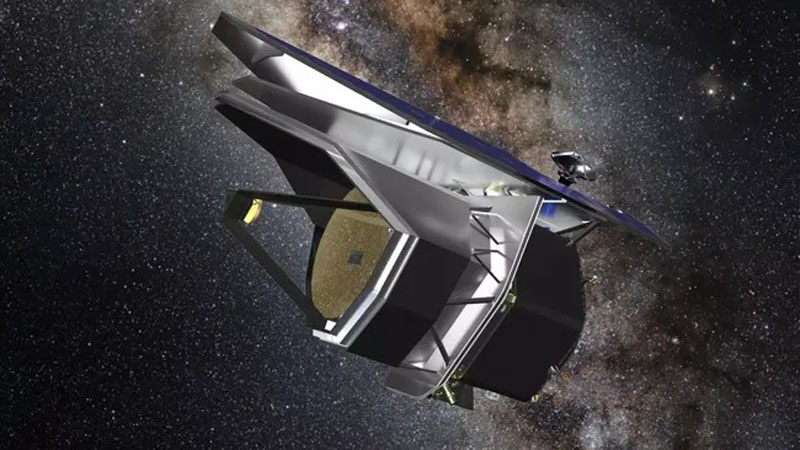
NASA has officially selected the PRIMA space telescope as the first mission in its new Probe Explorers class. This category was established following the Astro2020 decadal survey to bridge the gap between small-scale missions and massive flagship observatories, allowing for faster development cycles.
The project has transitioned to phase B, marking the start of detailed financial planning, technology maturation, and structural design. The total cost for the PRIMA mission is capped at $1.2 billion, excluding launch and additional operational expenses.
Equipped with a 1.8-meter mirror, the telescope will observe the universe in the far-infrared spectrum. This range is critical for studying cold gas, dust, and water, which are often invisible to optical or shorter-wavelength infrared instruments like the James Webb Space Telescope.
The primary scientific objectives include analyzing the formation of planetary systems, specifically the composition of protoplanetary disks. Furthermore, the observatory will investigate the evolution of galaxies, the growth of supermassive black holes, and the distribution of heavy elements.
The mission is scheduled for launch in 2033, with a planned primary scientific program duration of five years. PRIMA will serve as a complementary asset to existing infrared infrastructure, providing data on phenomena that were previously difficult to observe.