

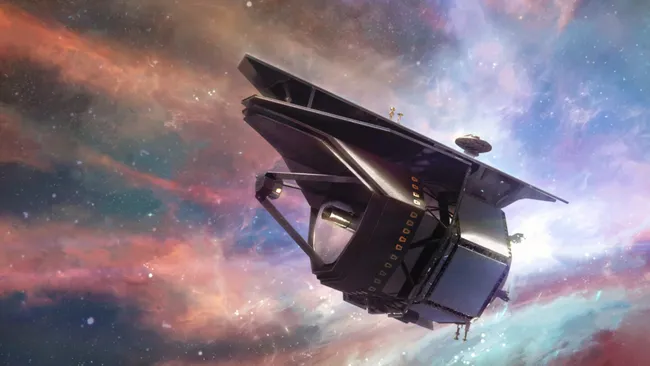
NASA has officially advanced the PRIMA mission to the next development phase, focusing on spacecraft design and the maturation of essential technologies. This project is currently undergoing a rigorous evaluation process, which serves as a prerequisite for final approval. If sanctioned, PRIMA will establish the new Probe Explorers class of missions for the agency.
The telescope is engineered to observe the universe in the far-infrared spectrum, utilizing a 1.8-meter primary mirror specifically optimized for these wavelengths. By targeting this range, the mission aims to investigate the formation of stars, planets, and black holes, while also exploring the origins of water on Earth.
PRIMA is designed to complement existing observational capabilities, specifically filling the gap left by the James Webb Space Telescope. While Webb primarily operates in the near- and mid-infrared ranges, PRIMA will extend these observations into longer wavelengths, providing a more comprehensive view of the cosmos.



