

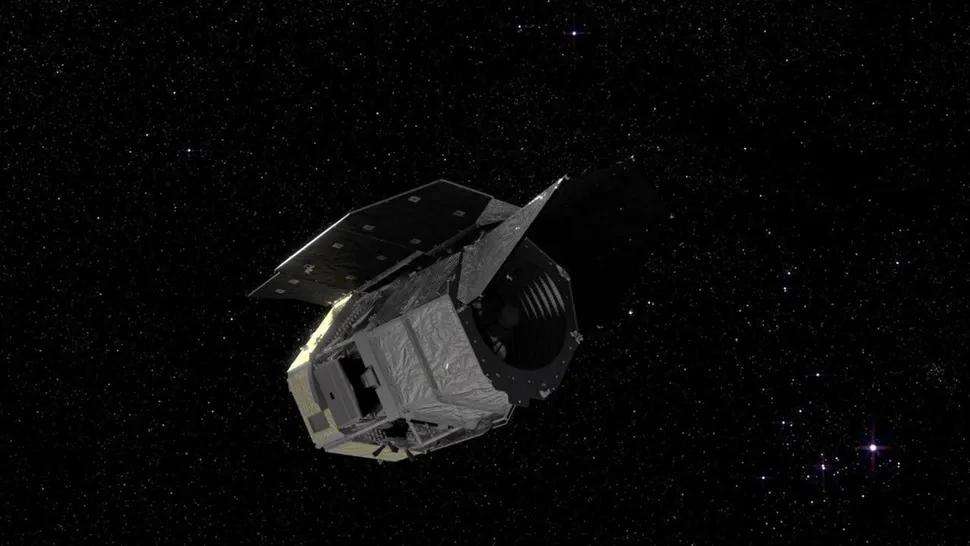
The Nancy Grace Roman Space Telescope, launched on August 30, 2026, via a SpaceX Falcon Heavy rocket, is currently en route to the second Lagrange point (L2), located 1.6 million km from Earth. NASA reports that the mission's lifespan has been extended to at least 22 years, significantly exceeding the initial 10-year projection.
The extended operational life is primarily due to high launch precision. The telescope consumed only 18 kg of fuel for its first trajectory correction, compared to the 200 kg originally reserved. Additionally, the spacecraft was two tons lighter than projected, allowing for a full load of 1,100 kg of fuel, bringing the total launch mass to 9,173.5 kg.
Future maneuvers, including a trajectory correction in September and final orbital insertion in December, are expected to consume less fuel than planned. Once operational, the telescope will perform station-keeping maneuvers every 28 days. NASA has also integrated hardware for potential future robotic refueling, though such technology is currently under development.
The telescope is functioning normally, with all 18 infrared detectors and the coronagraph passing initial tests. The primary camera features a 300 MP resolution and a field of view 100 times larger than Hubble's. The mission aims to study dark energy, dark matter, galaxies, and exoplanets.



