Moog Inc. is celebrating the 25th anniversary of the Evolved Secondary Payload Adapter (ESPA) ring. The technology reached a key milestone with the completion of its Critical Design Review on January 18, 2001. The project originated in 1999 as a joint initiative between the government and the private sector.
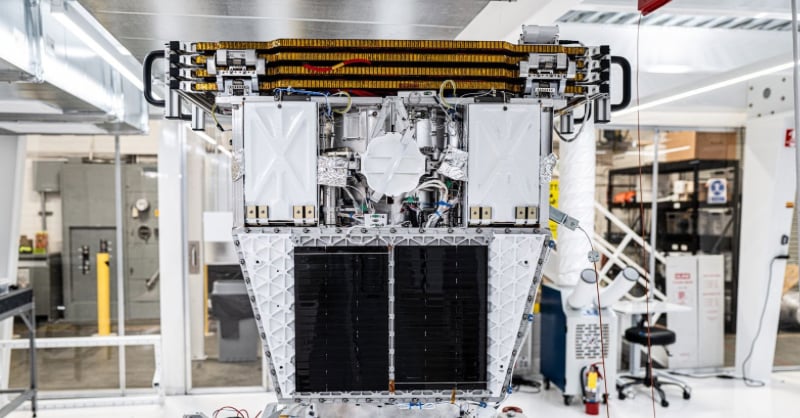
The ESPA ring allows launch vehicles to carry multiple secondary payloads by utilizing space beneath primary satellites. This design has expanded access to orbit for commercial, government, and defense missions. Over the years, the platform has evolved into a modular system that supports various payload sizes and interface configurations.
The current product line includes the Standard ESPA, ESPA Heavy, and ESPA Grande models. These configurations serve as structural foundations for spacecraft buses and support mission planning for organizations including NASA and the U.S. government. The company continues to develop these solutions for future space exploration.
To mark the anniversary, a flight-qualified ESPA ring will be exhibited at the National Museum of Nuclear Science and History in Albuquerque, New Mexico. The display is scheduled to run from November 7, 2026, through January 10, 2027, allowing visitors to view the hardware used in space rideshare missions.