

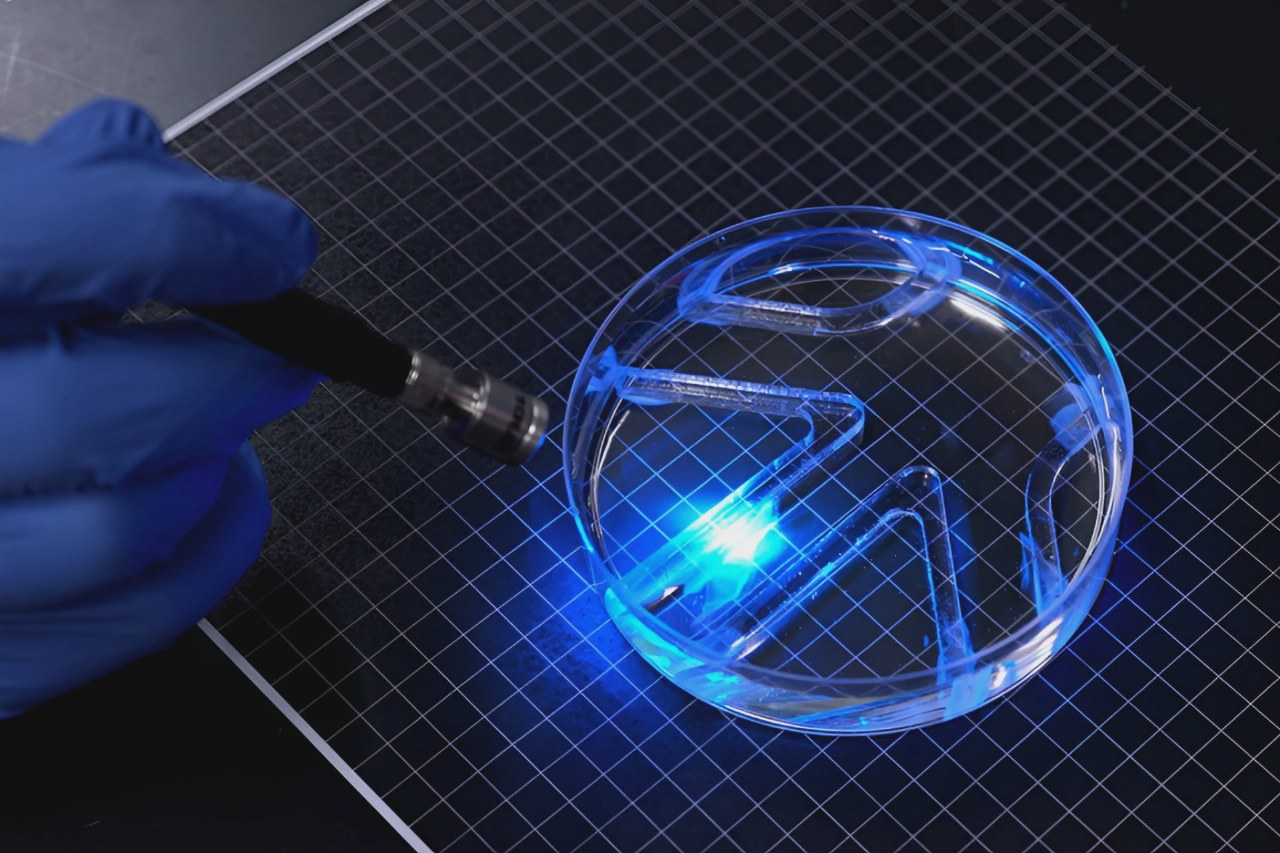
Engineers at MIT have developed a bio-hybrid swimming robot powered by living skeletal muscle cells. The device consists of a flexible hydrogel film, roughly the size of a piece of chewing gum, equipped with two fin-like structures. The robot measures approximately 0.5 millimeters in thickness and utilizes a single layer of muscle cell film for propulsion.
The research team used gelatin methacryloyl (GelMA) to create a support frame with square-bottomed grooves, which helps muscle fibers align and contract in unison. Each fin is 15 millimeters long and 7 millimeters wide. To enhance performance, the team trained the genetically modified muscle cells with light pulses twice per second for 15 minutes daily, resulting in a fourfold increase in fin displacement.
The robot achieves a linear swimming speed of four body lengths per minute and a rotation speed of up to 1200 degrees per minute. Under optimal conditions, the muscle tissue's contraction force density is 20 times higher than that of 3D muscle structures. The device can operate for over 30 days without external fixation, though it currently requires manual light control and lacks onboard electronics.
Led by Associate Professor Ritu Raman and graduate student Mahira Bawa, the team published their findings in the journal Advanced Functional Materials. The researchers suggest that the thin design reduces the number of cells required and lowers manufacturing costs compared to 3D muscle blocks. Future work will focus on optimizing the design to improve speed and explore new movement patterns.



