

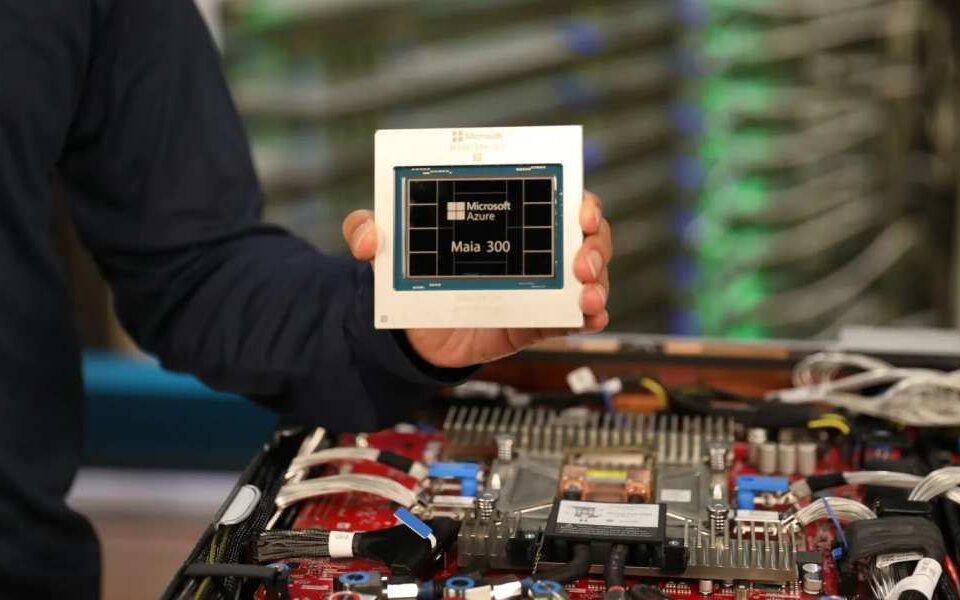
Microsoft has unveiled its third-generation AI accelerator, the Maia 300, as part of a strategy to reduce reliance on Nvidia GPUs. The company plans to shift its AI inference workloads to its proprietary silicon starting in 2027.
The Maia 300 is designed to serve as the primary inference system for Microsoft products and services. According to the company, the chip processes 40% more AI tokens per megawatt than leading GPU-based systems.
A rack configured with 96 Maia 300 accelerators is capable of processing up to seven times as many tokens as a rack equipped with the previous-generation Maia 200 chip.
Microsoft intends to scale the Maia family to multi-gigawatt deployments across its data centers. While the company is shifting inference tasks in-house, it will continue to use Nvidia and AMD processors for training large AI models.
The company introduced its first Maia chip in 2023 and the Maia 200 in January 2026. The Maia 200 currently supports production workloads for Microsoft Copilot and OpenAI models.



