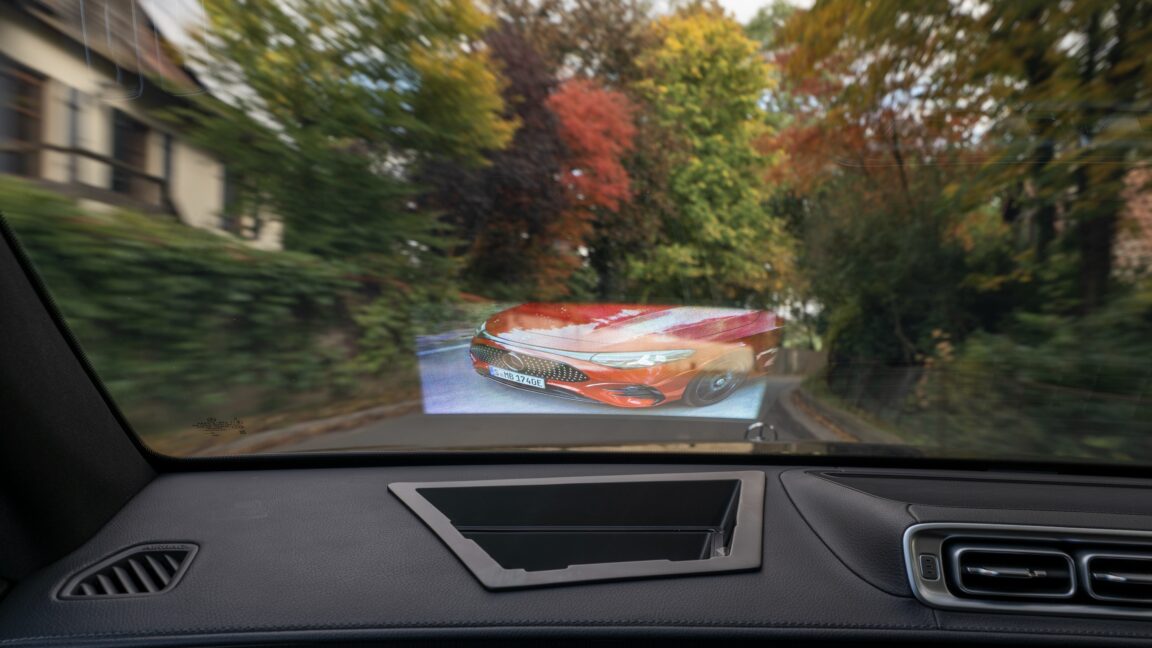
Mercedes-Benz is developing a holographic display technology designed as an advanced alternative to traditional heads-up displays and passenger-side touchscreens. The system utilizes a projector and a transparent film laminated into the windshield, which contains holographic optical elements to reflect light selectively.
The current prototype, tested in a pre-2027 S-Class at research facilities in Sindelfingen, Germany, features a projector that is significantly larger than the intended production version. Engineers aim to shrink the hardware so it can be concealed behind wood or metal trim, eliminating the need for visible cooling fans.
While the prototype demonstrates higher resolution than existing augmented reality HUDs, it currently suffers from contrast issues and image distortion caused by the windshield angle. Mercedes-Benz plans to increase the size of the holographic film area, known as the eyebox, to improve visibility and performance.
The company is exploring this technology to address customer feedback regarding interior design. Executives, including CEO Ola Källenius and design leadership, emphasize that luxury should prioritize craftsmanship, such as wood and metal, over the proliferation of large, permanent touchscreens.
Future applications for the holographic display include highlighting points of interest, facilitating video calls, or providing entertainment for drivers when Level 3 autonomous systems are active. Mercedes-Benz suggests this approach could maintain a premium aesthetic while integrating necessary digital features.