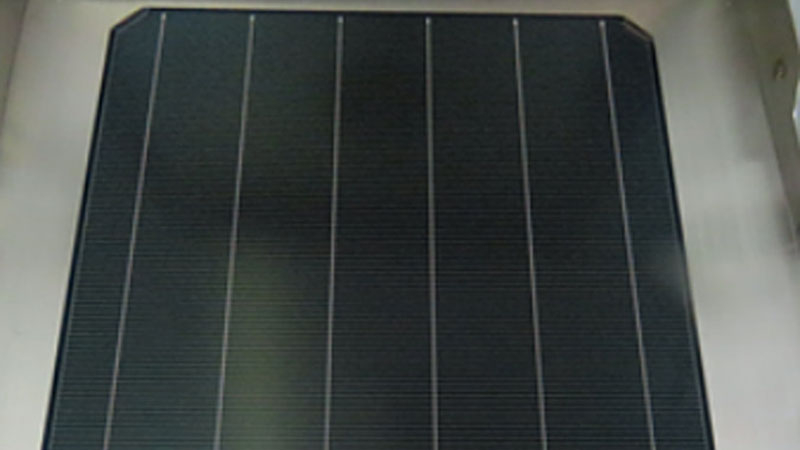
LONGi, a Chinese company, has achieved a new world record for single-junction silicon solar cell efficiency, reaching 28.29 percent. The result was verified by the Institute for Solar Energy Research in Hamelin (ISFH). This performance brings the technology very close to its theoretical efficiency limit.
The record-breaking cell utilizes the Hybrid Interdigitated Back Contact (HIBC) architecture. By moving both electrical contacts to the rear of the plate, the design maximizes the light-absorbing surface area and reduces charge carrier recombination losses. The cell is based on an M10 format high-resistance silicon wafer measuring 182 by 182 millimeters.
To optimize performance, engineers implemented indium tin oxide layers and passivation coatings made of aluminum oxide and silicon nitride. Laser processing was used to crystallize the amorphous silicon layer, reducing contact resistance. LONGi notes that current silicon cells have reached approximately 96.2 percent of their theoretical efficiency limit.
The company has consistently improved its efficiency metrics throughout the year, moving from 28.04 percent and 28.13 percent to the current 28.29 percent. Additionally, LONGi is working on tandem solar cells combining silicon and perovskite, where it has achieved an efficiency level of 34.6 percent.