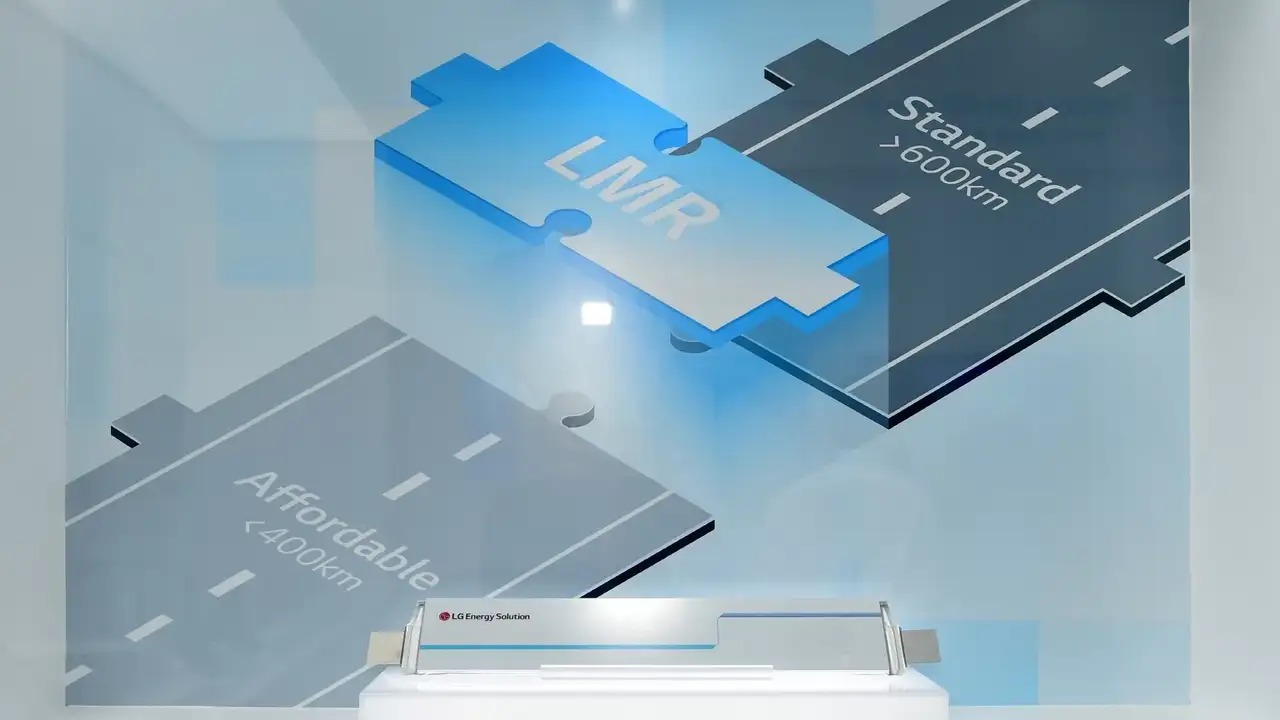
LG Energy Solution and Seoul National University have developed an experimental lithium-manganese-rich (LMR) battery cell. In testing, the cell maintained 92.2% of its initial capacity after 883 charge-discharge cycles. This research addresses the long-standing issue of capacity degradation in LMR batteries, which are considered a cost-effective alternative to nickel-cobalt-manganese (NCM) chemistries.
The research team optimized the cathode's oxygen reaction control to prevent structural damage and gas generation. By adjusting the charging cutoff voltage from 4.6V to 4.3V, oxygen recovery increased from 86% to 97%. Additionally, the discharge lower limit was expanded from 3V to 2V, and a low-temperature formation process was implemented during production to further stabilize the cell structure.
General Motors is actively exploring LMR technology, projecting that these batteries could offer 33% higher energy density than LFP batteries at a comparable cost. GM and LG Energy Solution have announced plans to begin mass production of LMR batteries in the United States by 2028. Despite these results, the technology has yet to be proven against mass-produced LFP batteries in charging speed and low-temperature performance.