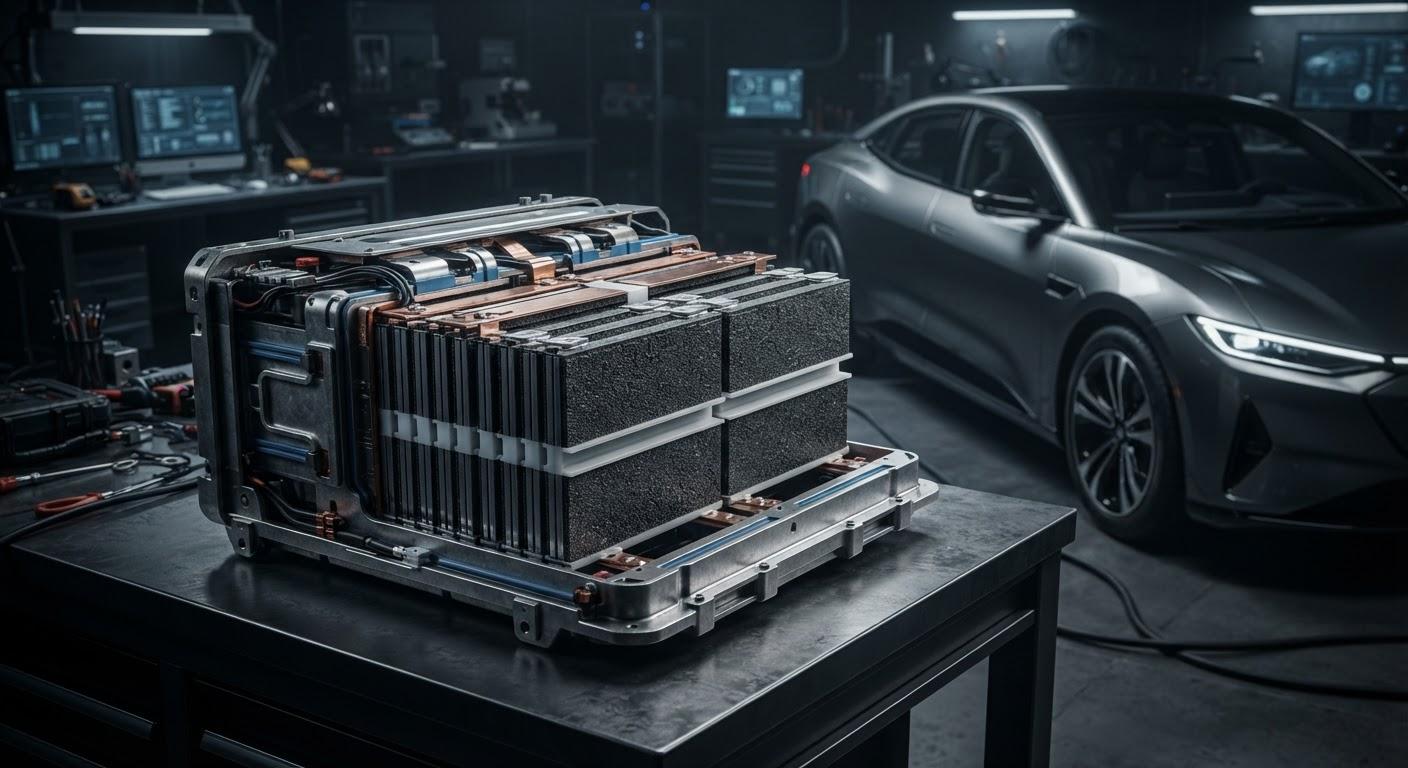
LG Energy Solution and Seoul National University have reported progress in developing lithium-manganese-rich (LMR) batteries. In recent tests, an experimental cell maintained 92.2% of its initial capacity after 883 charge and discharge cycles.
Researchers addressed the issue of cathode degradation by optimizing voltage limits. Reducing the upper charging limit from 4.6 V to 4.3 V and the lower discharge limit from 3 V to 2 V increased the reversibility of oxygen reactions from 86% to 97%.
The team also implemented a low-temperature initial formation process during manufacturing. This method, combined with voltage adjustments, helped reduce gas generation and structural damage within the battery cells.
While the results are promising, LMR technology still faces challenges in meeting the standard automotive requirement of 1000–2000 cycles. It must also prove its competitiveness against LFP batteries in terms of charging speed and low-temperature performance.
General Motors estimates that LMR cells could offer 33% higher energy density than LFP alternatives at a similar cost. GM and LG Energy Solution have previously announced plans to begin mass production of LMR batteries in the United States by 2028.