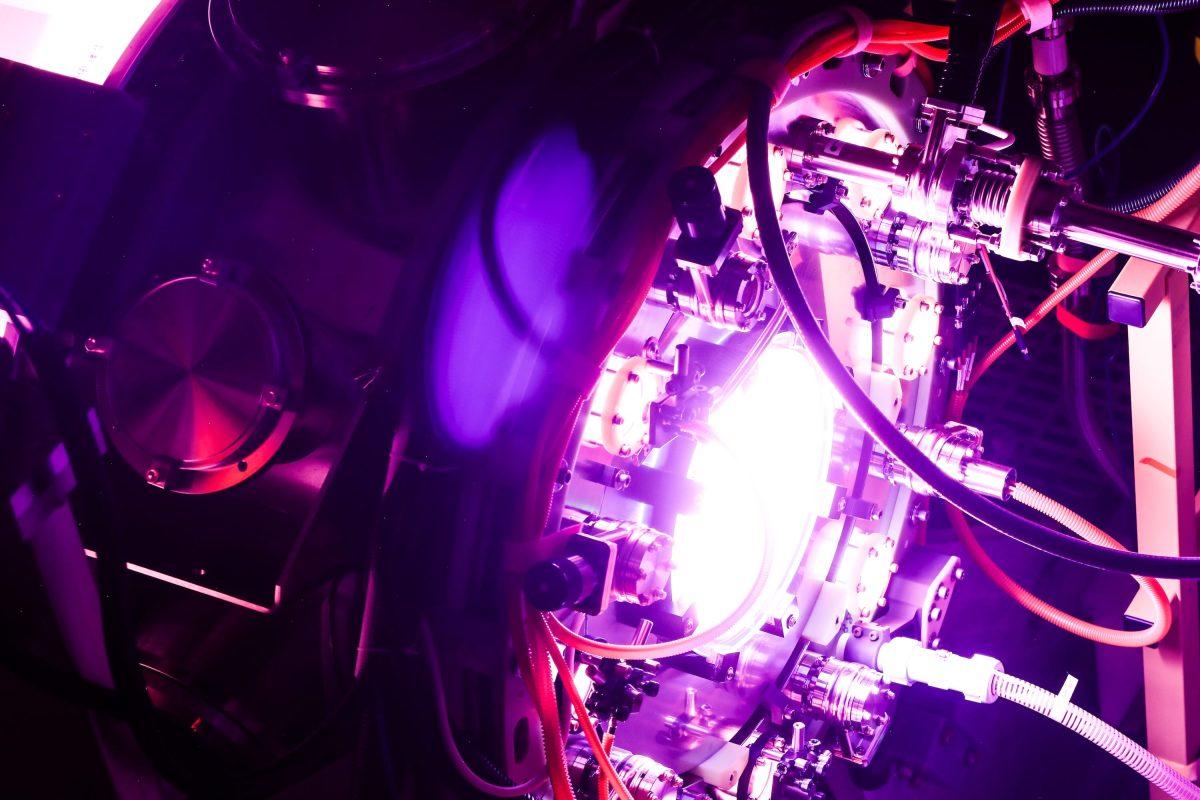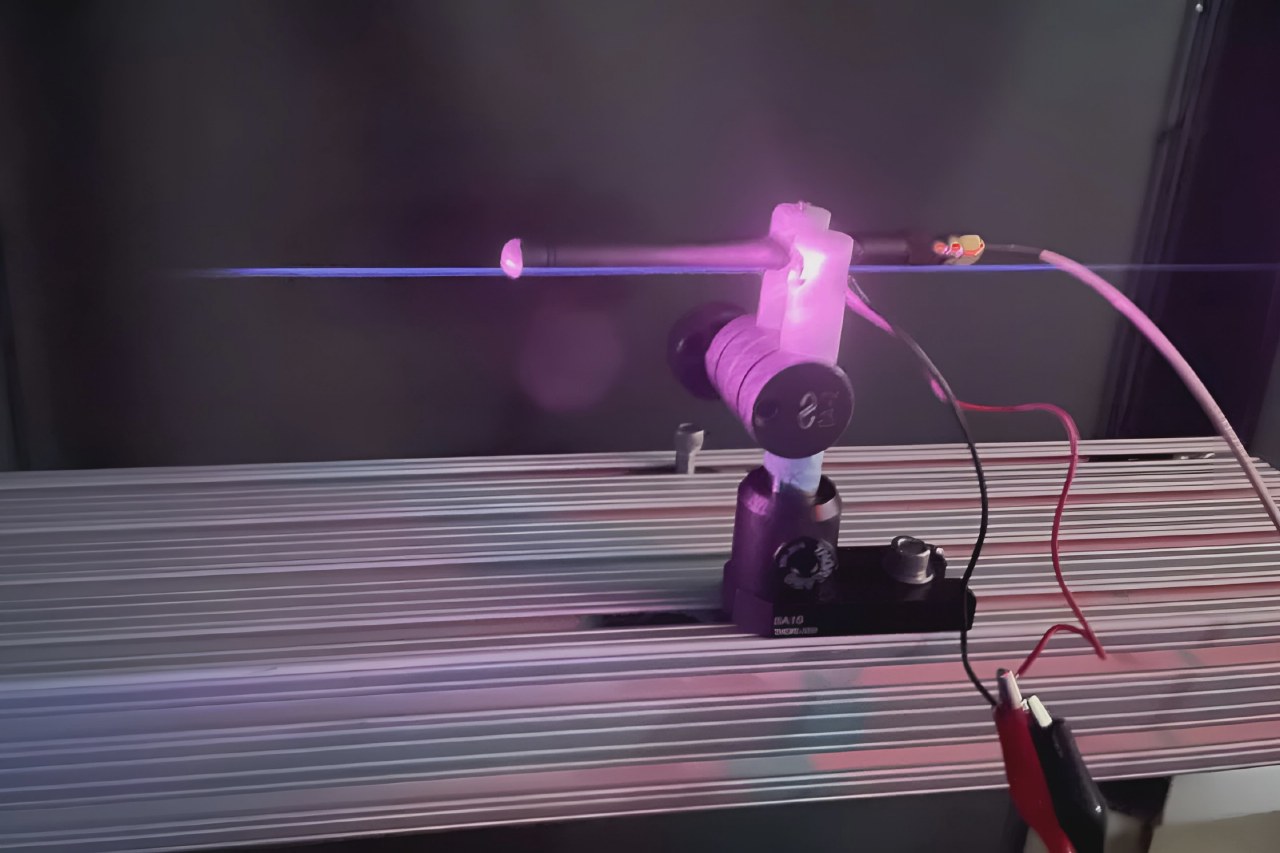
Researchers at North Carolina State University have successfully demonstrated a radio antenna created from a laser-induced plasma filament. The study, published in IEEE Microwave and Wireless Components Letters on September 1, 2026, confirms that ionized air channels can effectively transmit radio signals.
The system operates by ionizing air with a laser to form a plasma filament, which acts as the antenna. A non-contact capacitive coupling device, consisting of a metal ring, feeds radio frequency signals into the plasma without physical contact. This eliminates the need for traditional mechanical structures or metal rods.
During experiments at a 30 MHz frequency, the plasma antenna increased signal strength by approximately 150 percent compared to the control setup. The technology allows for adjusting the antenna's physical length by modifying laser parameters, offering potential flexibility for multi-band communication systems.
The research team suggests that controlling the laser beam direction could enable dynamic steering of communication signals or radar scans. This approach is considered particularly relevant for satellites and space exploration equipment, where reducing mechanical complexity and weight is a priority.
While the proof-of-concept is successful, the technology currently only supports signal transmission. Future research will focus on bidirectional communication capabilities, signal gain, stability, and performance in low-density atmospheric environments, as the current method requires air to generate plasma.