

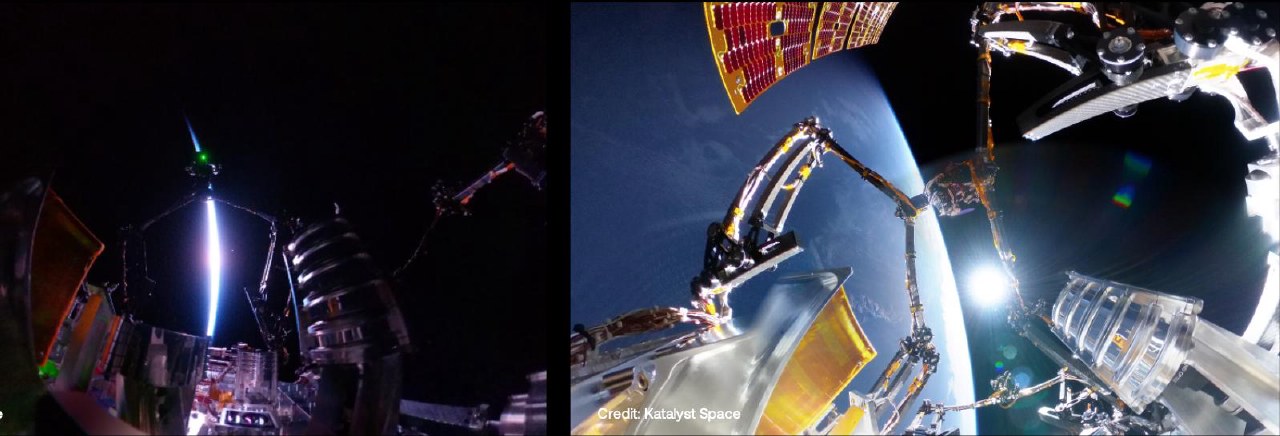
The LINK robotic spacecraft, developed by Katalyst Space, failed its mission to extend the operational life of NASA's Swift space observatory. Launched on July 3 from the Marshall Islands, the $30 million craft was designed to dock with the telescope and boost its orbit, as Swift lacks its own propulsion system.
Shortly after deployment, the spacecraft experienced an electronic failure that disabled two of its three reaction wheels. A subsequent valve malfunction in the reaction control system caused the unit to spin uncontrollably at a rate of 9 degrees per second, leading to a temporary loss of communication.
Engineers partially restored control, but the high fuel consumption required for stabilization forced NASA and Katalyst Space to abandon the docking mission on August 19. The team repurposed the remaining time to test the craft's robotic arms and capture images of Swift from a distance of 12–15 km.
The LINK mission concluded after 85 days in orbit when the craft re-entered the atmosphere and burned up on September 25. Despite the failure, both NASA and Katalyst Space intend to utilize the collected data and operational experience for future satellite servicing and maintenance projects.


