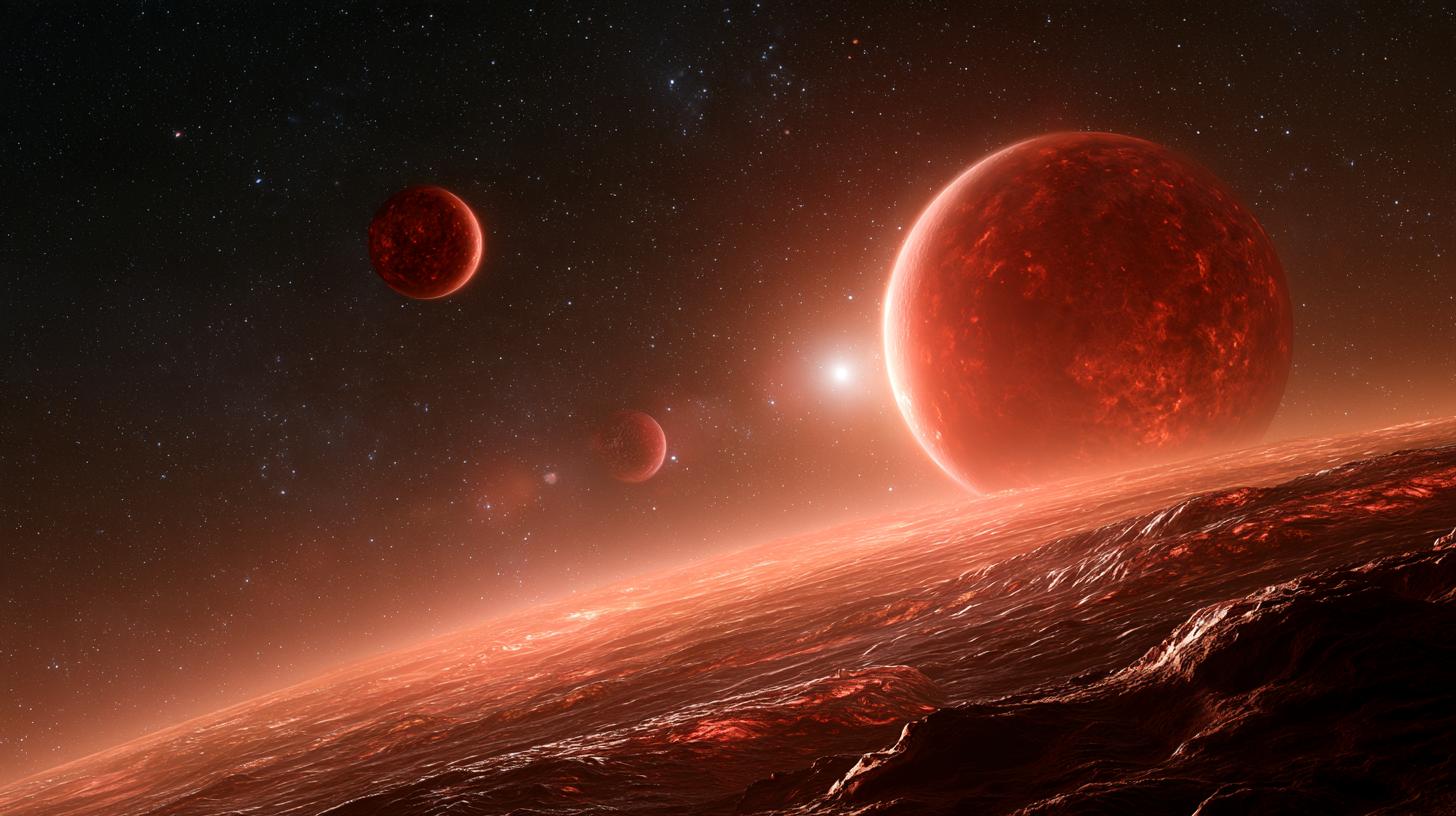
Researchers from Yunnan University identified three Jupiter-sized planets that survived the red giant phase of their host stars. The team utilized data from the NASA TESS space telescope to locate these celestial bodies. Typically, stars expand during this stage, consuming nearby planets before shedding their outer layers and shrinking.
Lead researcher Qian Shengbang stated that the discovery of three such planets suggests the existence of underlying physical mechanisms rather than mere coincidence. These findings indicate that the interaction between aging stars and their orbiting planets is more complex than previous evolutionary models had predicted.
The Sun is expected to transition into a red giant in approximately 5 billion years, a process traditionally believed to result in the destruction of Earth. While this new data does not guarantee Earth's survival, it prompts further investigation into the dynamics of planetary systems during stellar evolution.