

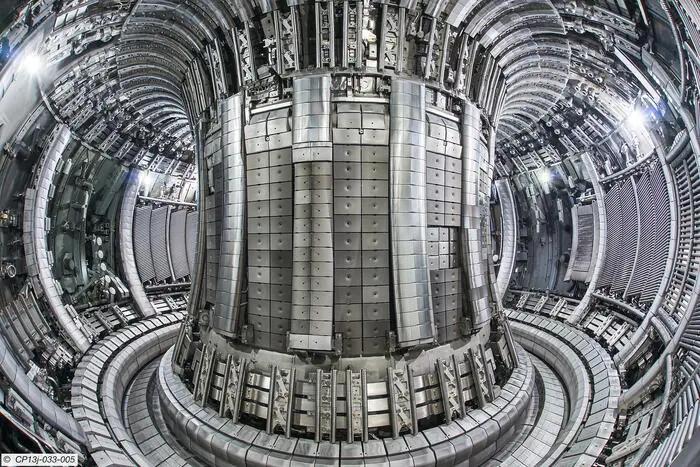
The ITER international thermonuclear reactor project, currently under construction in France, is set to receive its sixth sector module by the end of 2026. This component will feature specialized nozzles manufactured by Russian specialists, as confirmed by Russian Deputy Prime Minister Dmitry Chernyshenko.
Russia remains an active participant in the project, contributing both financial resources and essential high-tech equipment. The ITER facility is being developed through a global partnership involving the European Union, Russia, the United States, China, India, Japan, and South Korea.
The European Union covers approximately 45% of the project's total cost, while the other partners each contribute about 9%. The reactor utilizes the tokamak concept, which involves confining superheated plasma within a toroidal chamber using magnetic fields, a principle originally developed in the USSR.
ITER is designed as an experimental facility rather than a commercial power plant and will not provide electricity to the grid. Its primary objective is to demonstrate the feasibility of large-scale thermonuclear energy production to inform the development of future commercial reactors.



