

The private Chinese space firm iSpace has unveiled plans for its new heavy-lift rocket, Hyperbola-9, designed for lunar and Martian exploration. The company announced the development on October 11, 2026, during its tenth-anniversary presentation.
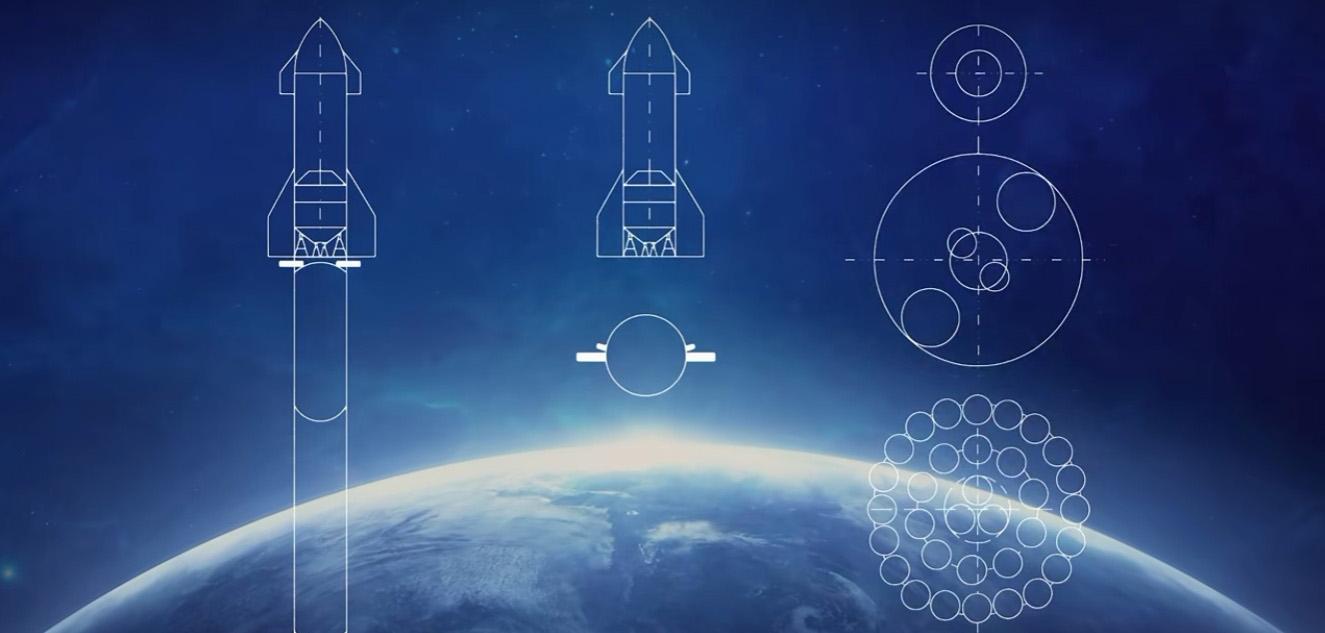
The rocket is designed to carry up to 100 tons of payload to low Earth orbit and 50 tons toward the Moon. It will feature a diameter of approximately 11 meters and generate a liftoff thrust of 7,000 tons-force.
The first stage will utilize 33 liquid oxygen and methane engines, each providing 300 tons-force of thrust. The second stage is set to include four engines, with two specifically optimized for vacuum operations to facilitate orbital maneuvers.
Hyperbola-9 is intended to be fully reusable. The first stage will perform a vertical landing, while the second stage will employ aerodynamic braking for atmospheric reentry and subsequent recovery.
Simultaneously, iSpace is advancing its Hyperbola-3 commercial launch vehicle. The company has already manufactured full-scale components and is currently conducting tests, with the first orbital flight and sea-platform landing attempt scheduled for 2026.



