

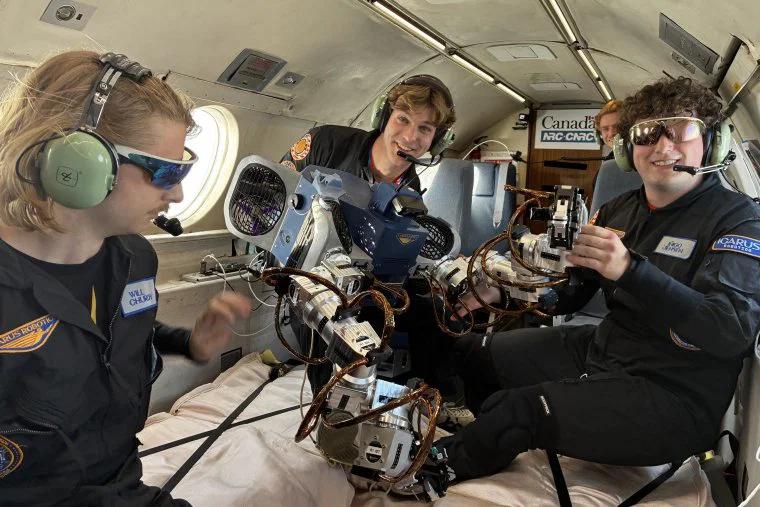
Icarus Robotics successfully tested its JOY robot in microgravity conditions during four parabolic flights conducted between September 9 and 11, 2026. The machine spent a total of 22 minutes in a weightless environment, marking the final stage of testing before its scheduled deployment to the International Space Station in 2027.
The robot is designed as a free-flying unit featuring two manipulators with seven degrees of freedom. It is intended to perform autonomous tasks on the station, surpassing the capabilities of the current Astrobee system. According to NASA, the cost of one hour of astronaut labor is $130 000, and the agency currently employs 37 active astronauts.
During the flight tests, engineers observed a brief instability phase upon entering microgravity, which was corrected in real time. The robot's manipulators performed better than expected, with control algorithms successfully managing the difference in movement dynamics compared to terrestrial conditions.
Technical director Jamie Palmer described the flights as a dress rehearsal for the upcoming mission. Before the final launch, the company plans to conduct qualification tests for an updated version of the robot, as well as verify communication latency and uplink protocols with NASA infrastructure.



