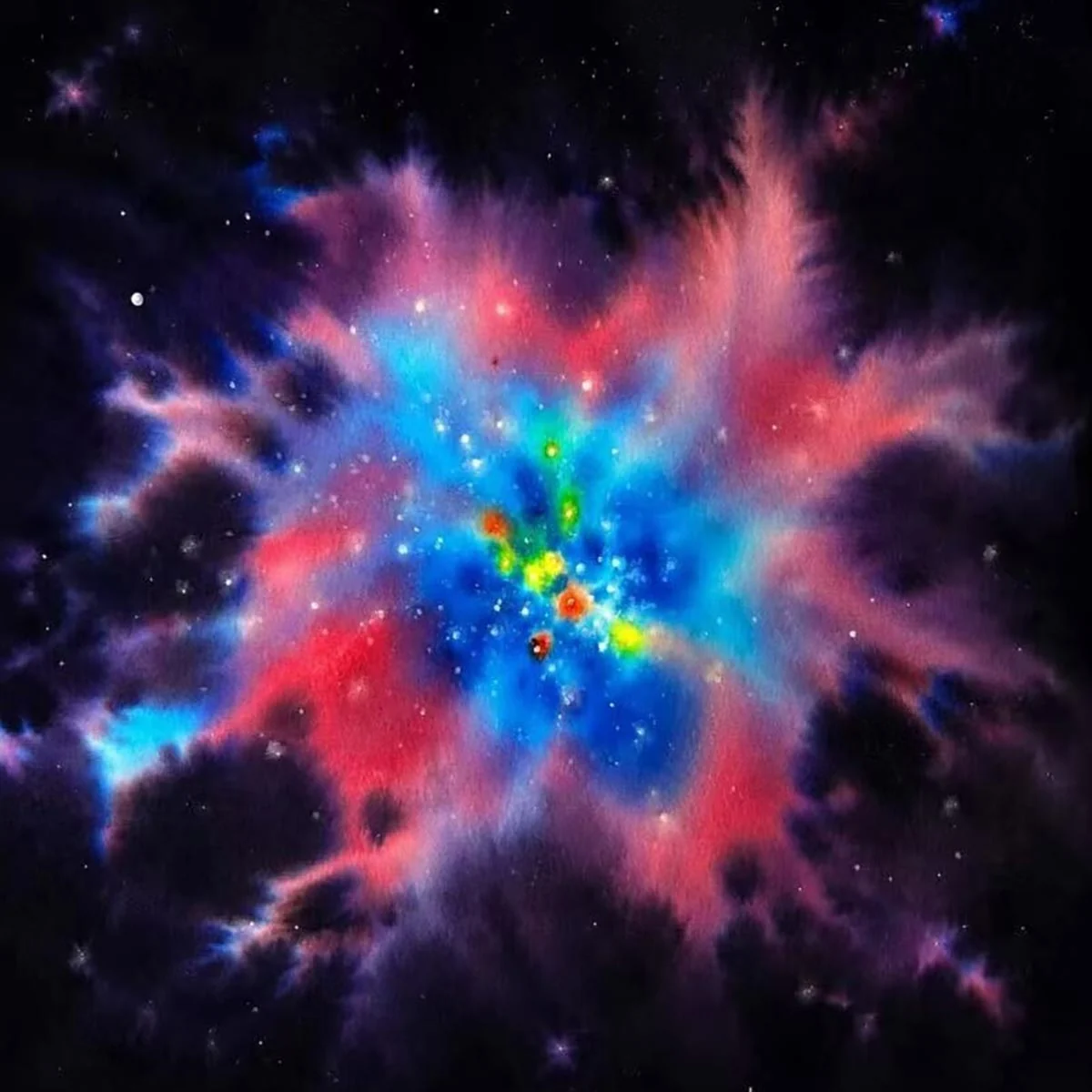
A study published in Nature Astronomy on October 15, 2026, challenges the traditional theory that supernova-driven galactic winds facilitate the escape of ionizing radiation. Researchers using the Hubble Space Telescope observed six nearby starburst galaxies to analyze the relationship between gas outflow speeds and radiation leakage.
Contrary to previous models, the data indicates that higher galactic wind speeds correlate with lower rates of ionizing radiation escape. Intense gas outflows appear to redistribute neutral hydrogen and dust, creating more extensive shielding that blocks ultraviolet light rather than clearing paths for it.
The findings suggest that ionizing radiation may escape more effectively during an early phase, shortly after massive star formation but before large-scale supernova explosions occur. This implies that young stars and their stellar winds might play a more significant role in reionization than previously assumed.
Experts from Johns Hopkins University and Zhejiang University note that these results necessitate a revision of cosmological hydrodynamic simulations. Future models must account for the complex interplay between stellar radiation and gas structure before the onset of supernova activity.
The study acknowledges limitations due to its small sample size of six galaxies. Researchers plan to request additional Hubble observation time to expand the study, aiming to determine if these mechanisms are universal across different galaxy types and evolutionary stages.