

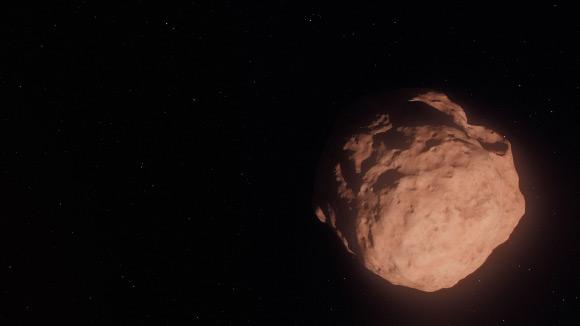
Astronomers utilized the Hubble and James Webb space telescopes to identify and analyze 27 trans-Neptunian objects located beyond Neptune's orbit. The research team combined Hubble's optical observations with Webb's infrared capabilities to detect these faint bodies, which are among the smallest ever documented in the solar system.
The smallest detected object measures approximately 5 kilometers in diameter. Researchers noted that the brightness of one specific object is comparable to observing fireflies on the Moon from Earth. Despite their small size, these bodies exhibit colors similar to much larger objects in the same region, suggesting they have retained their original material properties.
The study revealed fewer small trans-Neptunian objects than previous models predicted. Researchers compared 'cold' objects, which follow near-circular orbits, with 'hot' objects that possess inclined and elongated paths. Both groups showed similar size distributions, indicating that planetesimal formation processes were consistent across different early solar system conditions.
The findings suggest that even objects with significantly altered orbits retain characteristics from their place of origin. This indicates that subsequent collisions and orbital shifts did not erase evidence of their initial composition. These observations provide a rare opportunity to study the remnants of the material that formed the solar system.



