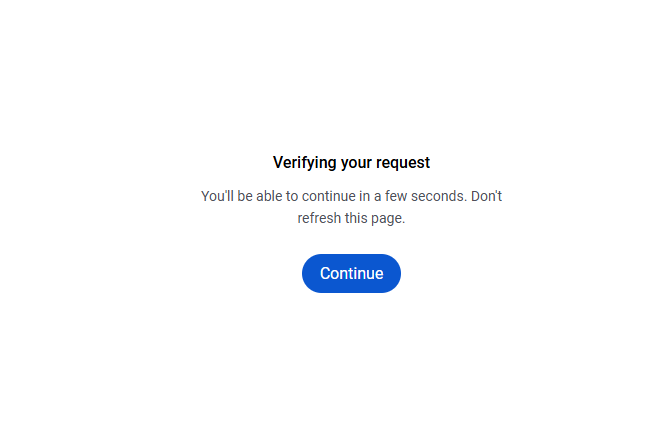
Google has introduced a new verification mechanism for search results, requiring users to pass through a goto intermediate page. This page often displays a countdown, forcing users to wait for several seconds before being redirected to the final destination. Reports from the official Google community indicate that the duration of this wait can vary, with some users experiencing delays of up to 12 seconds.
The implementation involves encrypting search result URLs using Base64 encoding with additional parameters. Because these links cannot be decrypted directly, all traffic must pass through Google servers. Technical analysis by the search firm RESONEO suggests that the intermediate page functions primarily as a forced delay mechanism rather than a standard verification process, allowing Google to collect user behavioral data.
The frequency of these verification prompts depends on user behavior and browser settings. Users who are not logged into their Google accounts, use proxy IPs, or utilize non-Chrome browsers report higher rates of triggering the mechanism. Rapidly clicking multiple search results is also more likely to initiate the wait, whereas logged-in users typically encounter fewer interruptions.
Industry observers believe this update is designed to combat AI crawlers and automated scrapers. By masking the actual destination URLs and requiring server-side interaction, Google makes it significantly harder for AI agents to crawl search results. This change has also impacted SEO data analysis platforms, which now face difficulties in reliably extracting information from search pages.