

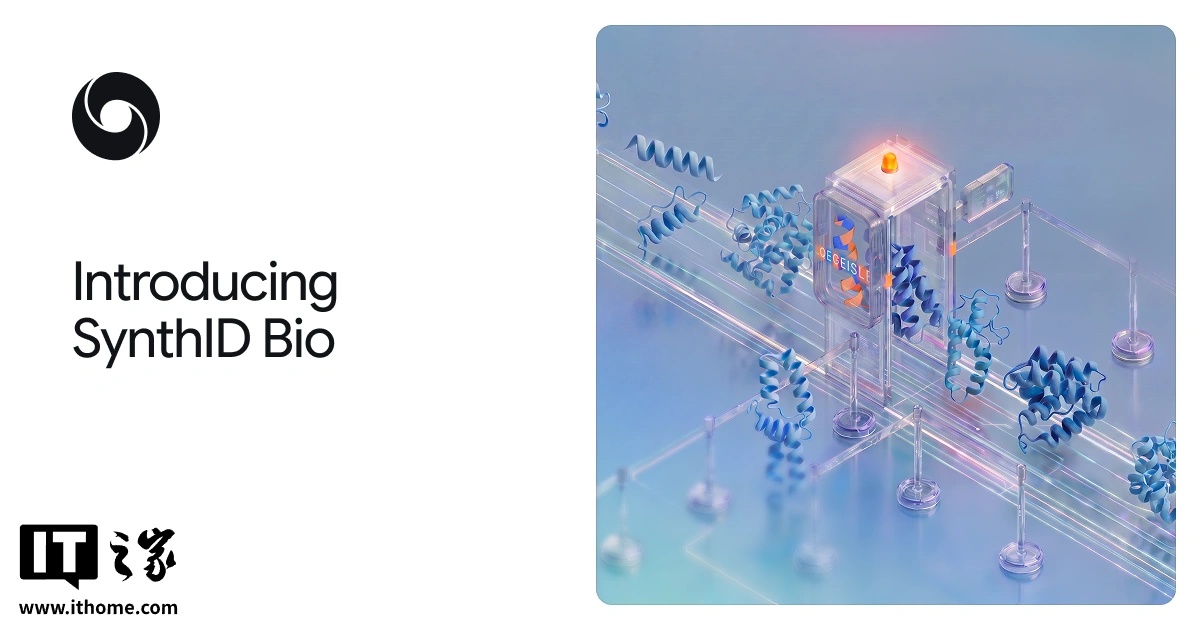
Google DeepMind has introduced SynthID Bio, a digital watermarking technology designed for synthetic biology. The system embeds imperceptible signatures directly into biological codes, allowing verification on both digital models and physical proteins without compromising their biological functions.
The technology adjusts amino acid selections and atomic coordinates to create detectable signals. In lab tests involving VEGF-A, SARS-CoV-2 RBD, and PD-L1 proteins, watermarked designs maintained binding affinity and structural diversity comparable to non-watermarked versions.
For protein folding, SynthID Bio integrates directly into the AlphaFold 3 diffusion network by fine-tuning model weights. This ensures that 3D coordinates contain detectable features while preserving prediction accuracy and structural integrity against digital noise.
The tool aims to enhance biosecurity by providing automated verification for DNA synthesis screening. It helps distinguish sequences generated by trusted models from potentially harmful ones, while also supporting the integrity of databases like UniProt and GenBank.
Google is currently expanding the technology to more complex biological entities. In collaboration with Stanford University's Hie Lab and the Arc Institute, the team has integrated SynthID Bio into the Evo 2 genomic model to watermark bacteriophage genomes.


