

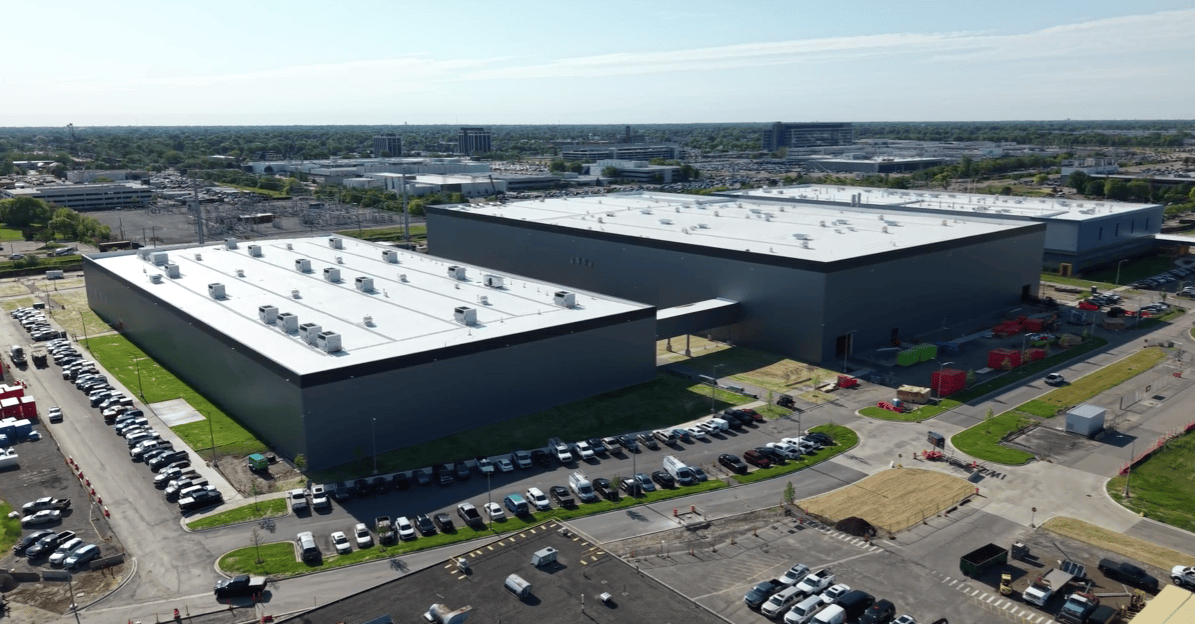
General Motors has launched the Battery Cell Development Center (BCDC) in Warren, Michigan, a facility spanning 500,000 square feet. The project represents a $900 million investment aimed at bridging the gap between research and high-volume production. The center will focus on prototyping new cell chemistries, including lithium manganese-rich and sodium-ion cells, to reduce reliance on minerals controlled by China.
The BCDC serves as a testing ground for industrial manufacturing processes, allowing engineers to optimize production techniques before scaling them up. While the facility can produce 4 to 5 gigawatt-hours of cells at maximum capacity, its primary purpose is quality assurance rather than volume. The site utilizes advanced virtualization and AI models to simulate chemical changes and manufacturing steps, potentially cutting development time significantly.
The facility operates in conjunction with the adjacent Wallace Battery Cell Innovation Center. While Wallace handles small-batch testing, the BCDC uses full-scale machinery to produce thousands of cells daily. This process prepares designs for mass production at partner plants, such as the Ultium Cells facilities in Ohio and Tennessee. The first test cells at the BCDC are expected in the fourth quarter of this year.
GM is integrating digital twins and AI to accelerate the transition from lab to market. By analyzing a decade of battery data, the company can predict the outcomes of chemistry variations in days rather than months. This approach has already allowed GM to reduce slurry mixing time by 50 percent. The company aims to use these methods to compete more effectively in the electric vehicle market.



