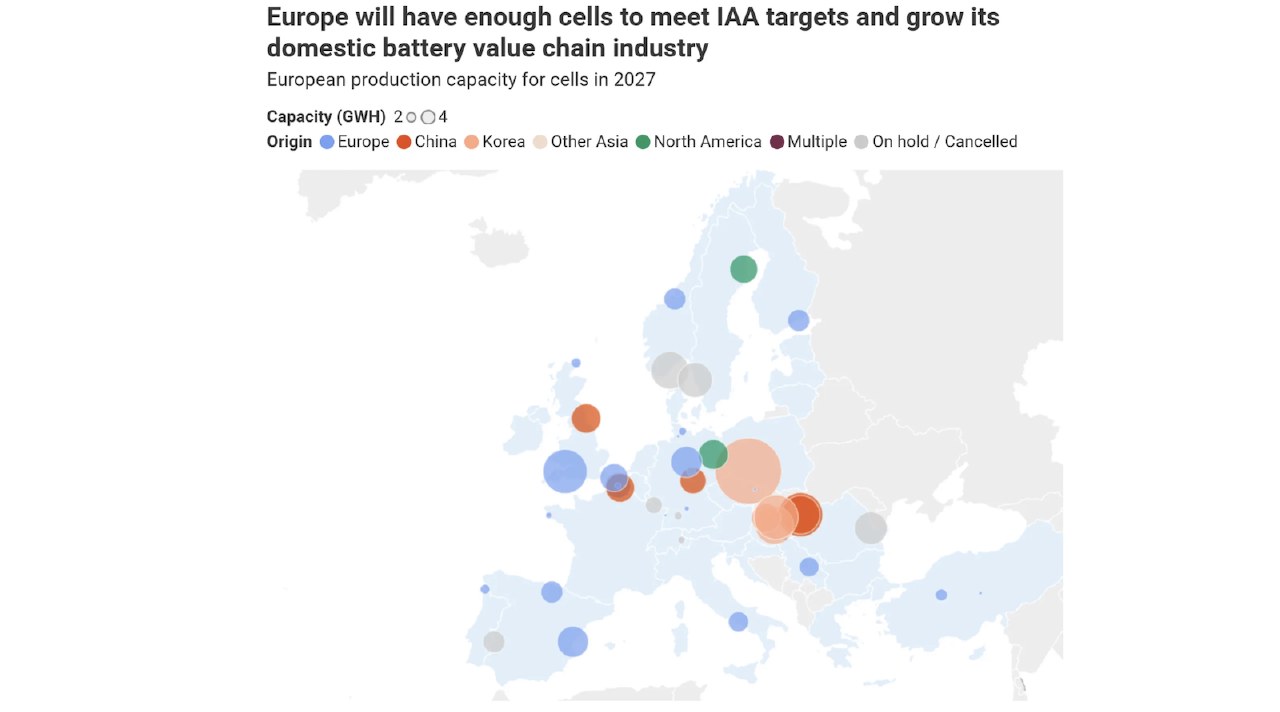
A new analysis by Transport & Environment indicates that the European Union will have sufficient production capacity for locally manufactured battery cells by 2030. This supply is expected to meet the requirements of the Industrial Accelerator Act, which covers corporate and private electric vehicles eligible for public subsidies.
The report suggests that implementing local content requirements for battery cells and cathode active materials could increase EU battery demand by 34% by 2027 compared to current projections. Such measures are intended to provide the demand certainty necessary to compete with Chinese imports, which currently face minimal tariff barriers.
The European battery supply chain faces significant challenges in the production of midstream components, specifically cathode active materials and their precursors. China currently controls up to 90% of global production capacity for these materials, with the figure reaching 95% for LFP chemistry.
To secure the domestic value chain, analysts recommend establishing stable offtake agreements between European cell producers and material facilities. Additionally, the EU faces an upcoming test of its local content rules for electric vehicles under the EU-UK Trade and Cooperation Agreement, which is scheduled to take effect in January.