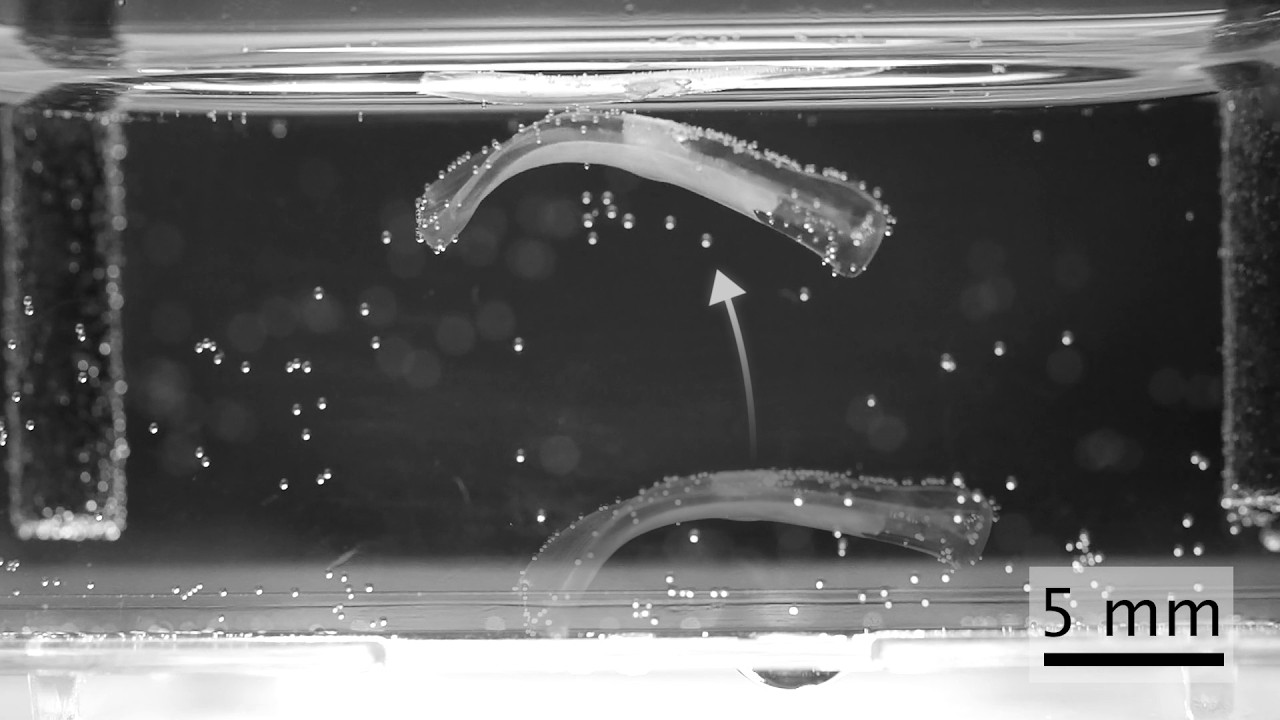
Researchers at ETH Zurich have developed a bio-hybrid microrobot measuring approximately 1.5 centimeters in length. The device integrates living mouse skeletal muscle tissue with a flexible hydrogel scaffold, enabling movements such as jumping, swimming, crawling, and grasping.
The team utilized Xolography, a light-based 3D printing technology, to fabricate the hydrogel scaffolds in approximately one minute per unit. An algorithm was employed to optimize the distribution and volume of the muscle tissue alongside the mechanical properties of the scaffold to maximize movement efficiency.
The new actuator achieves movement amplitudes up to 11 times greater than previous systems with similar muscle mass. The device can jump 5 millimeters—one-third of its body length—and reach a walking speed of 6.2 millimeters per second, or 0.4 body lengths per second, setting a new speed record for this class of robots.
Despite these results, practical application remains distant. The muscle tissue requires a nutrient solution for survival, meaning the robot cannot function outside a laboratory environment. Future scaling would likely necessitate an artificial circulatory system to provide oxygen and nutrients while removing waste.