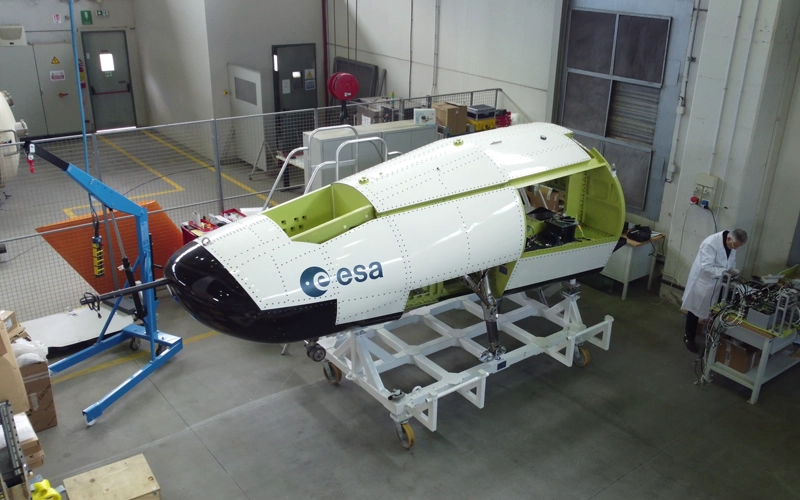
The European Space Agency lost a full-scale test model of its Space Rider spaceplane during a recent drop test. The incident occurred when the vehicle's parafoil failed to deploy correctly, preventing a controlled landing. ESA has launched an independent investigation to identify the root cause of the failure.
This event marks the second anomaly for the program this year. In May, a previous attempt was aborted during the captive ascent phase, when a CH-47 Chinook helicopter was transporting the model. While that vehicle was recovered safely, the latest failure resulted in the total loss of the test unit.
Earlier testing in 2024 and 2025 relied on mass simulators to evaluate autonomous landing systems and parafoil performance. The recent campaign utilized a full-scale model designed to replicate the spacecraft's mass, aerodynamics, and landing gear to validate performance in representative conditions.
Despite these setbacks, ESA maintains its goal of launching the inaugural Space Rider mission in 2028. The target window has shifted from the first quarter to the second quarter of that year. The mission will utilize a Vega C rocket with an upgraded P160C first stage from the Guiana Space Centre.