

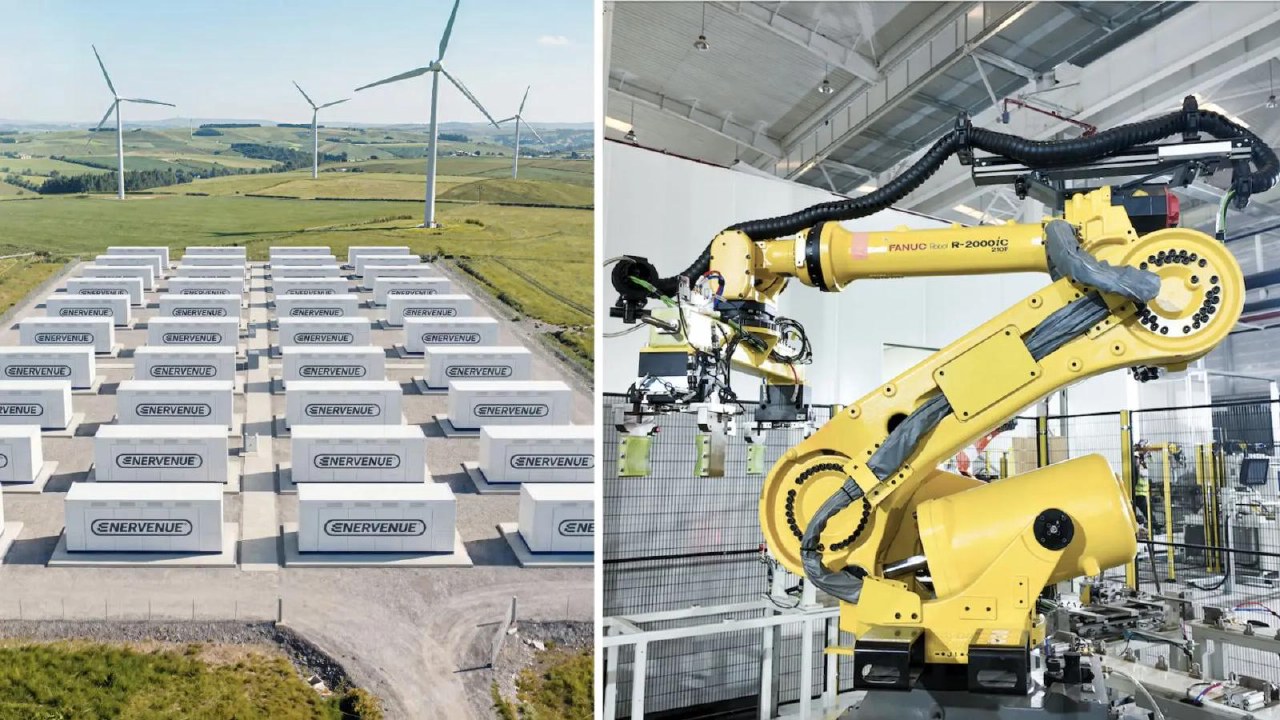
EnerVenue has launched mass production of Aqueous Metal Cell (AMC) batteries at its new facility in California. The plant is designed as a high-throughput line for nickel-hydrogen cells, which were historically used in space missions like the Hubble Telescope and the International Space Station. The company adapted this technology for stationary energy storage using more accessible materials.
The AMC cells are rated for up to 30,000 charge-discharge cycles, offering a service life of up to 30 years based on three cycles per day. EnerVenue notes that these batteries do not require capacity augmentation over their lifespan. Each unit undergoes 41 quality checks across 11 testing stations, and assembled 150 kWh battery racks are fully verified before shipment.
The facility currently has an annual production capacity of 250 MWh, with plans to scale to 1 GWh in 2027 and several GWh by 2028. The plant spans approximately 20,000 square meters and allows for future expansion. EnerVenue focuses on long-term stationary storage, emphasizing the total cost of ownership rather than competing directly with lithium-ion batteries on initial price.


