

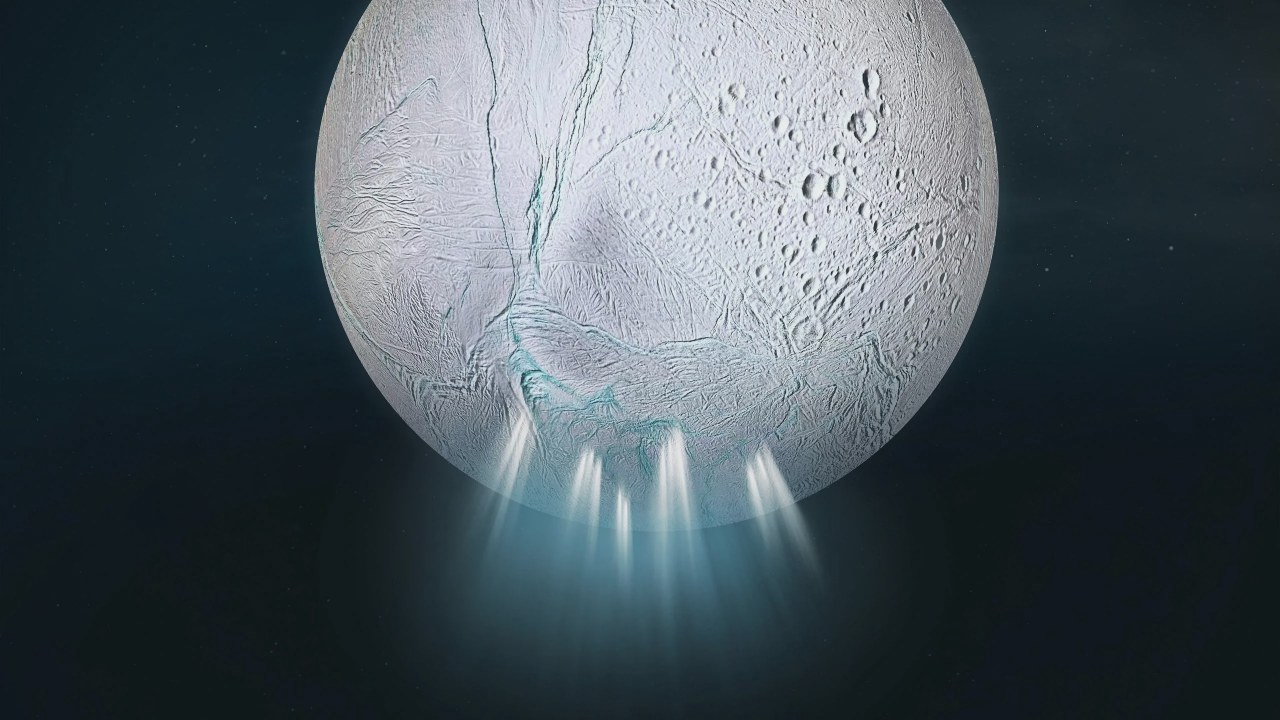
Two recent studies published in Science Advances suggest that Saturn's moon Enceladus is more habitable than previously thought. The research highlights that the moon's ice plumes act as a natural sample preparation system, concentrating ocean materials and making the detection of biological markers significantly easier for future space missions.
Led by Frank Postberg from the Free University of Berlin, the first study analyzed Cassini data and physical models to explain plume formation. As water vapor rises through ice cracks, gradual freezing causes salts and organic compounds to concentrate unevenly. These droplets accelerate to thousands of kilometers per hour, shattering into micro-particles that carry high concentrations of ocean material.
This natural concentration mechanism allows future probes to analyze individual micro-particles rather than diluted samples. Existing onboard analytical instruments are capable of identifying microbial-level materials within these concentrated particles, significantly increasing the probability of detecting life signatures without needing to drill through the moon's thick ice shell.
A second study, led by the University of Munich, tested the survival of Methanothermococcus okinawensis, a deep-sea archaea, in simulated Enceladus conditions. The environment featured high alkalinity with a pH of 10 to 11, low oxygen, and limited carbon dioxide. The microbes successfully adapted to these conditions by utilizing hydrogen and carbon dioxide released from water-rock interactions.
The experiments confirmed that the archaea could maintain metabolism and produce methane despite the extreme environment. These findings validate that the chemical energy and liquid water present on Enceladus could support life forms similar to those found in Earth's deep-sea hydrothermal vents, providing a clear framework for future exploration.



