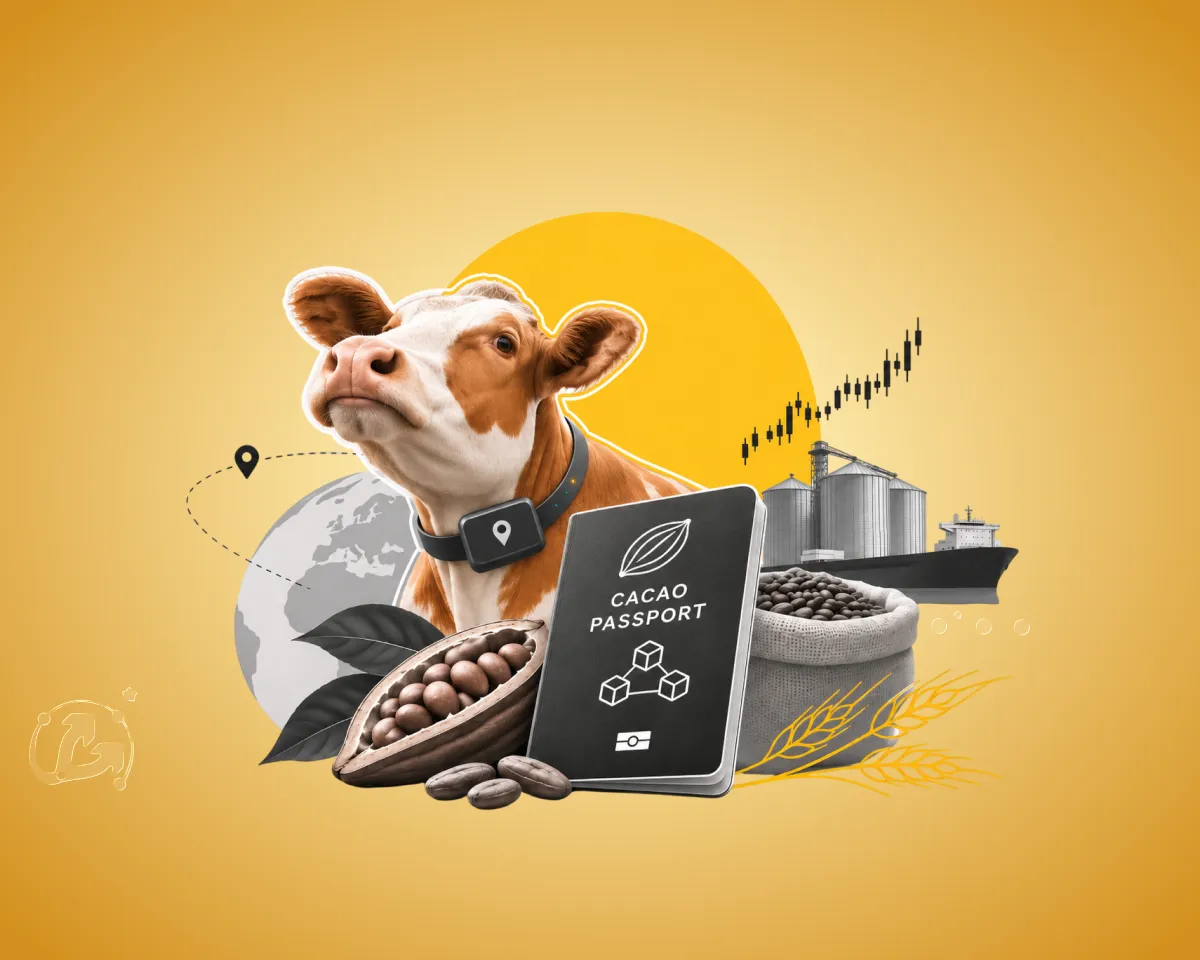
Agricultural firms are increasingly adopting AI and blockchain to streamline supply chains and meet regulatory demands. From March 2026, New Zealand-based Halter has deployed one million smart collars for livestock, supported by Starlink satellite internet, to manage grazing via GPS-defined virtual fences.
Data accuracy is becoming critical for precision farming. The GEODNET network, which provides GPS signal corrections via decentralized base stations, reported $2.8 million in revenue for Q3 2026. Meanwhile, NASA Harvest and Kernel are utilizing satellite imagery and AI to monitor crop rotation and predict yields, as demonstrated in recent trials across Ukraine.
Financial innovation in the sector includes RWA tokenization and automated trade finance. Agrotoken, now under the Justoken brand, has issued tokens backed by agricultural commodities on the Polygon blockchain, with a total market capitalization of approximately $700 million. Additionally, Brazil’s B3 exchange manages digital agricultural bills, with 333,000 instruments in circulation as of September 2026.
Logistics and compliance are also undergoing digital transformation. The Covantis platform, used by major grain traders, processed 256 million tons of exports in 2024. Furthermore, to comply with the EU’s upcoming deforestation regulations, companies like Merck and The Hashgraph Group are piloting blockchain-based digital passports for cocoa to verify the origin of raw materials.
AI agents are optimizing complex logistics networks. C.H. Robinson reported that its AI-driven system reduced empty shipping cycles by 42% and improved on-time departures by 7% between January 2024 and January 2026. These tools allow for rapid price calculations and automated scheduling across thousands of warehouses.