

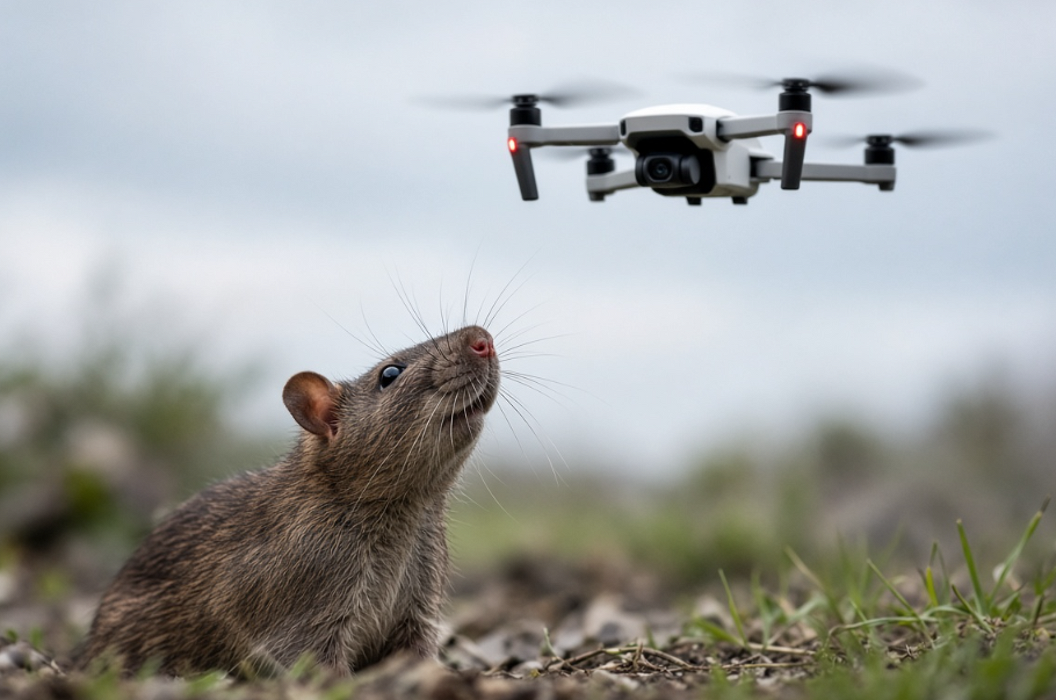
Researchers at the Delft University of Technology have developed artificial whiskers that enable drones to navigate in total darkness. These sensors mimic the vibrissae of rats and mice, allowing robots to sense their surroundings when optical systems like cameras or lidars are ineffective.
The device consists of three miniature pressure sensors attached to a flexible, lightweight cord a few centimeters long. When the drone encounters an obstacle, the cord bends and exerts pressure on the sensors, helping the system calculate the object's position and distance to avoid collisions.
The system is designed for compact robots weighing less than 100 grams, where traditional navigation tools are too heavy or power-hungry. The developers created a specialized algorithm requiring only 34 KB of memory to process signals and filter out noise from motors and propellers.
This low memory requirement allows the sensors to operate in real-time on simple, cost-effective microcontrollers. Potential applications for this technology include search and rescue operations in disaster zones, where robots must navigate dark, cluttered environments.


