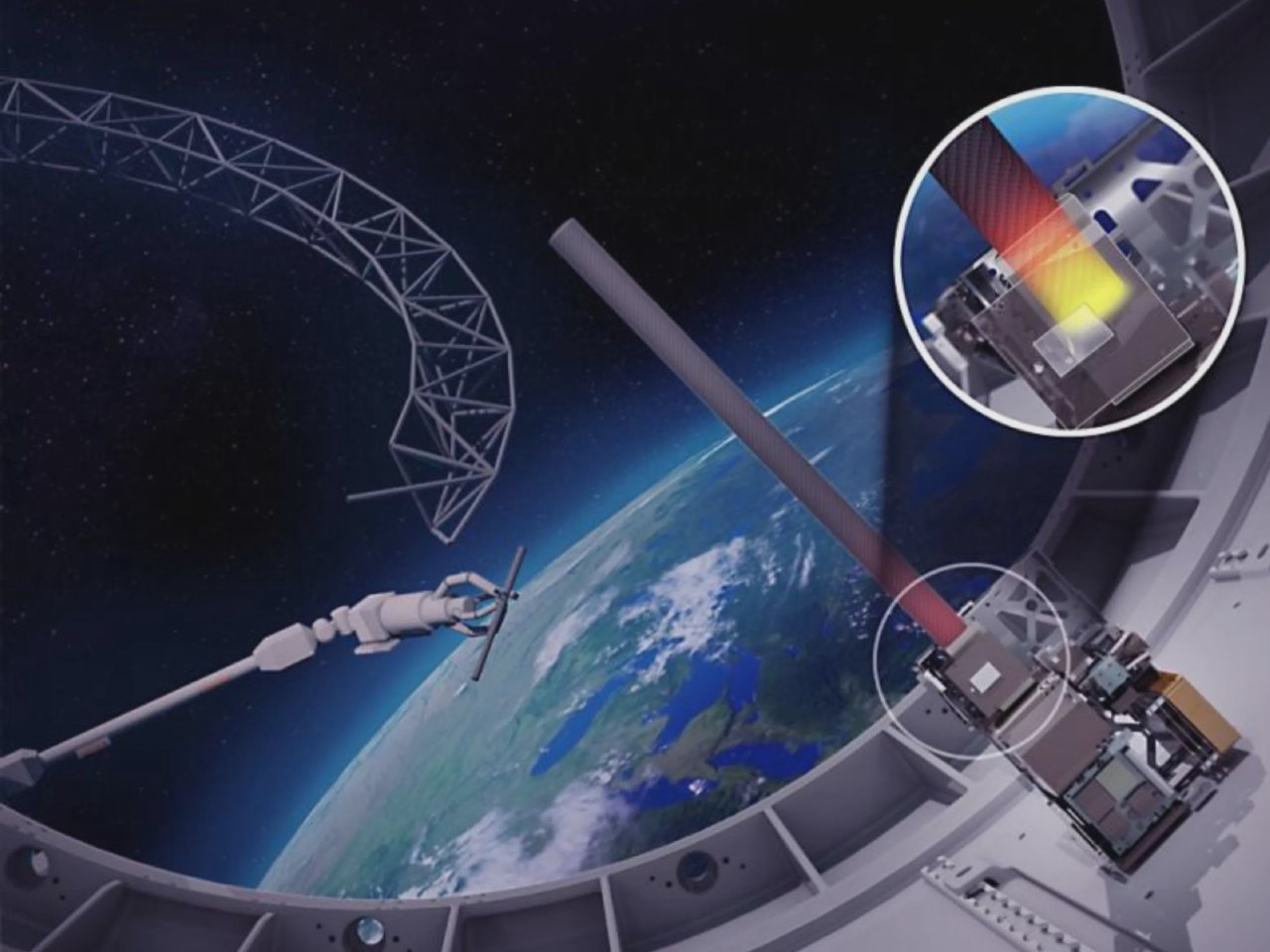
A robot funded by DARPA and developed by Caltech has successfully performed an autonomous structural assembly in orbit. This milestone marks the first time a machine has built a structure in space without human intervention, utilizing composite tubes, aluminum connectors, and reflective membranes to assemble a section of a truss.
The mission is part of the Autonomous Space Tension-Reflected Assembly (ASTRA) project. The robot was tasked with assembling the third segment of a 1.4-meter diameter antenna system, while two other segments were pre-assembled before launch. The process relies on repeatable assembly steps rather than complex algorithms to build large structures.
The operation currently requires significant support from ground teams due to limited communication windows of approximately 15 minutes per day. Engineers analyze photos sent by the robot and perform simulations on identical ground-based hardware before transmitting instructions to the orbital unit.
This demonstration supports the DARPA Novel Orbital and Moon Manufacturing, Materials, and Efficient Design (NOM4D) program. The long-term vision is to transport raw materials to orbit for manufacturing, enabling the construction of massive orbital structures, such as antennas or solar arrays, that exceed current launch vehicle size constraints.