

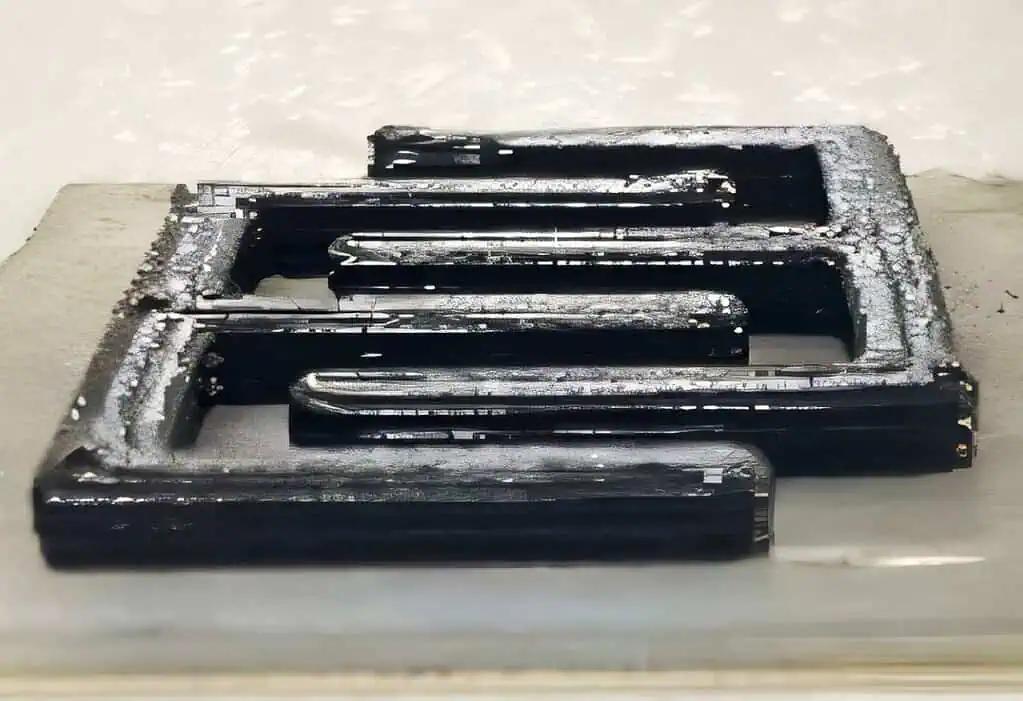
Researchers from the Harbin Institute of Technology and the Chinese Academy of Sciences have developed a 3D-printed concrete slab that functions as a supercapacitor. The material uses a conductive paste made of cement, carbon black, and carbon nanotubes, arranged in an interdigitated electrode geometry to facilitate ion movement through micro-pores.
The prototype achieved a capacitance of 162.14 millifarads per square centimeter and an energy density of 22.52 microwatt-hours per square centimeter. The concrete maintains a compressive strength of 23 megapascals, matching the standards for commercial floor slabs and staircases.
While the technology allows for hundreds of thousands of charge-discharge cycles, it faces significant challenges. Performance drops sharply at -18 degrees Celsius due to pore water freezing, and scaling the technology requires addressing moisture protection, wiring, and production costs.
This project builds upon previous research, including MIT's 2023 carbon-cement supercapacitor work. The Chinese team's innovation lies in integrating the printing of electrodes directly into the structural concrete, which helps prevent delamination issues found in earlier designs.



