

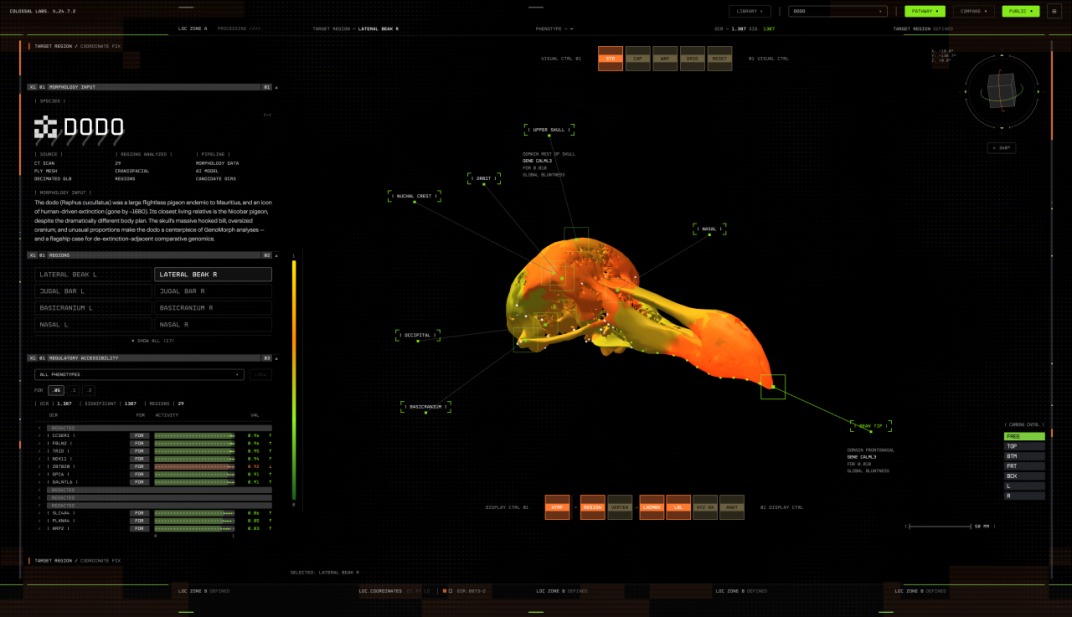
Colossal Biosciences has launched an AI platform called GenoMorph, designed to accelerate research into de-extinction. The system integrates 3D morphology, comparative genomics, and developmental biology to identify target genes for editing, particularly in projects with limited genomic data.
The platform was developed over more than a year using developmental data from chickens, quail, ducks, and pigeons, alongside genetic information from over 70 bird species. It functions as a predictive tool that identifies key DNA variations, allowing researchers to bypass the need to manually screen massive datasets.
For the dodo de-extinction project, the team has already identified approximately 2,300 DNA editing targets related to craniofacial development. Colossal is also utilizing lipid nanoparticles to deliver gene-editing tools into developing bird embryos, enabling faster observation of genetic impacts without waiting for full maturation cycles.
The company reported that its population of Nicobar pigeons, the closest living relative to the dodo, has reached 36 individuals. Researchers have successfully cultivated key cells capable of developing into eggs and sperm, which are essential for future breeding efforts.
XPRIZE founder Peter Diamandis, an investor in Colossal, has launched a new venture capital firm, NeoGenesis Capital. The fund will support companies utilizing Colossal's programmable biology platform across sectors including agriculture, healthcare, and species conservation.



