

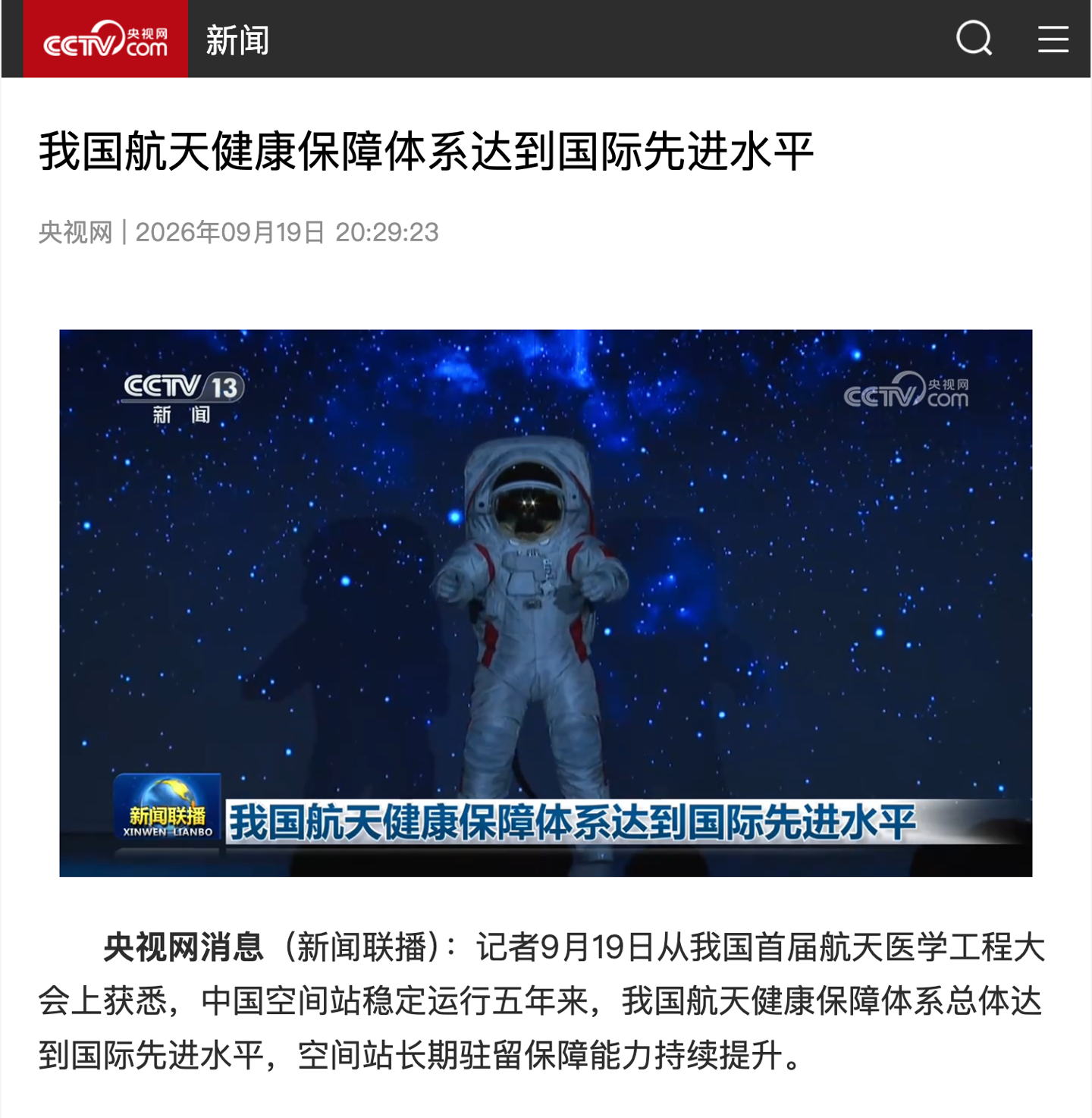
China's space station has maintained stable operations for five years, leading to the development of an aerospace health support system that meets international standards. The system integrates weightlessness protection, nutritional support, medical monitoring, psychological support, and environmental safety.
Engineers are transitioning from physical-chemical life support to controlled ecological systems. The new Wangyu lunar suit, designed for upcoming moon missions, features lightweight and compact architecture. It incorporates dozens of key technologies to ensure safety during extravehicular activities in lunar environments.
The space station now hosts original brain-computer interface and group-brain coordination equipment. These tools support ongoing on-orbit experiments. Researchers are also exploring how to apply findings on human adaptation to extreme environments in civilian medical fields.
The Di Xing-3 bed rest study concluded in late August. This simulation of weightlessness helps verify physiological protection technologies for long-term space flights and lunar missions. Data gathered will support future health protocols for astronauts on extended stays.
As of June, the station has implemented 267 scientific projects. In the past year alone, 86 new experiments were added. The station received 1179 kilograms of scientific supplies, returned 105 kilograms of samples, and generated over 150 terabytes of data.


