China is advancing its commercial space capabilities with the development of two new cargo spacecraft: the Qingzhou by IAMCAS and the reusable Haolong spaceplane by AVIC. The Qingzhou prototype, launched in March, is currently testing scientific payloads in orbit, while a second unit is scheduled for a January 2027 launch to deliver 1,800 kg of supplies to the Tiangong station.
The Haolong spaceplane is designed for runway landings and repeated missions with a capacity of 2,000 kg. While its launch date remains unconfirmed, a recent tender for an orbital flight suggests progress. The vehicle may be launched by the ZhuQue-3 rocket, with its wings expanding from five to eight meters in orbit.
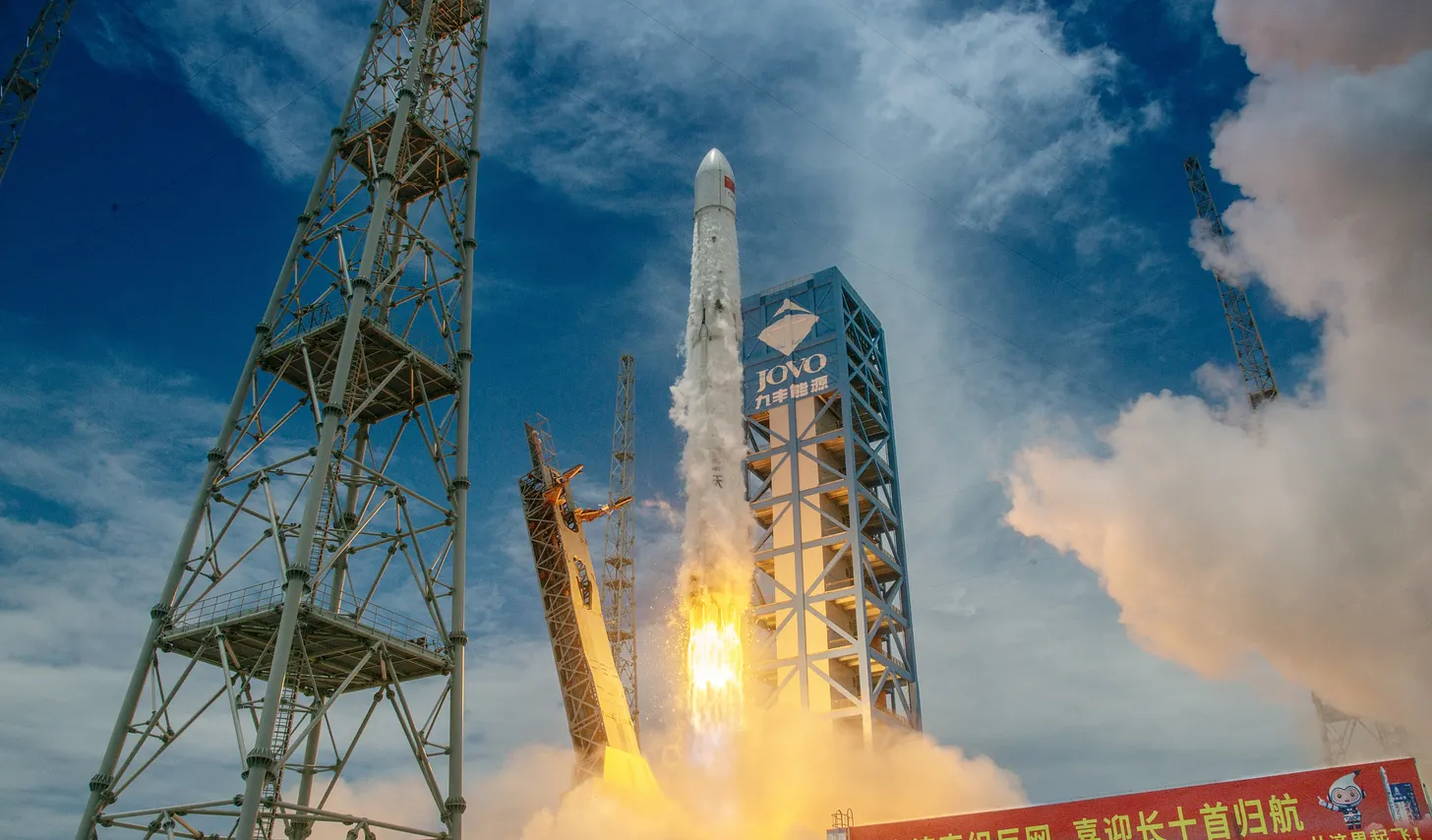
China is also preparing for the potential reuse of a Chang Zheng 10B booster, which was recovered in July. A second Chang Zheng 12A launch is expected by November 3, aiming for the country's third successful orbital booster recovery. New commercial launch pads in Hainan are undergoing final checks for upcoming missions.
The nation's broadband satellite constellations, Guowang and Qianfan, are expanding their service trials. Guowang currently consists of 222 satellites, while both networks aim to reach at least 13,000 units. Additionally, the BeiDou navigation system recently completed a 140-day in-orbit upgrade to maintain its positioning accuracy.
Private firms are also scaling operations: i-Space plans a droneship landing for its Shuang Quxian-3 rocket in early 2027. Meanwhile, Cosmoleap is testing its Yueqian-1 rocket, which features a 70-meter height and nine YF-209 engines designed for up to 30 reuse cycles.