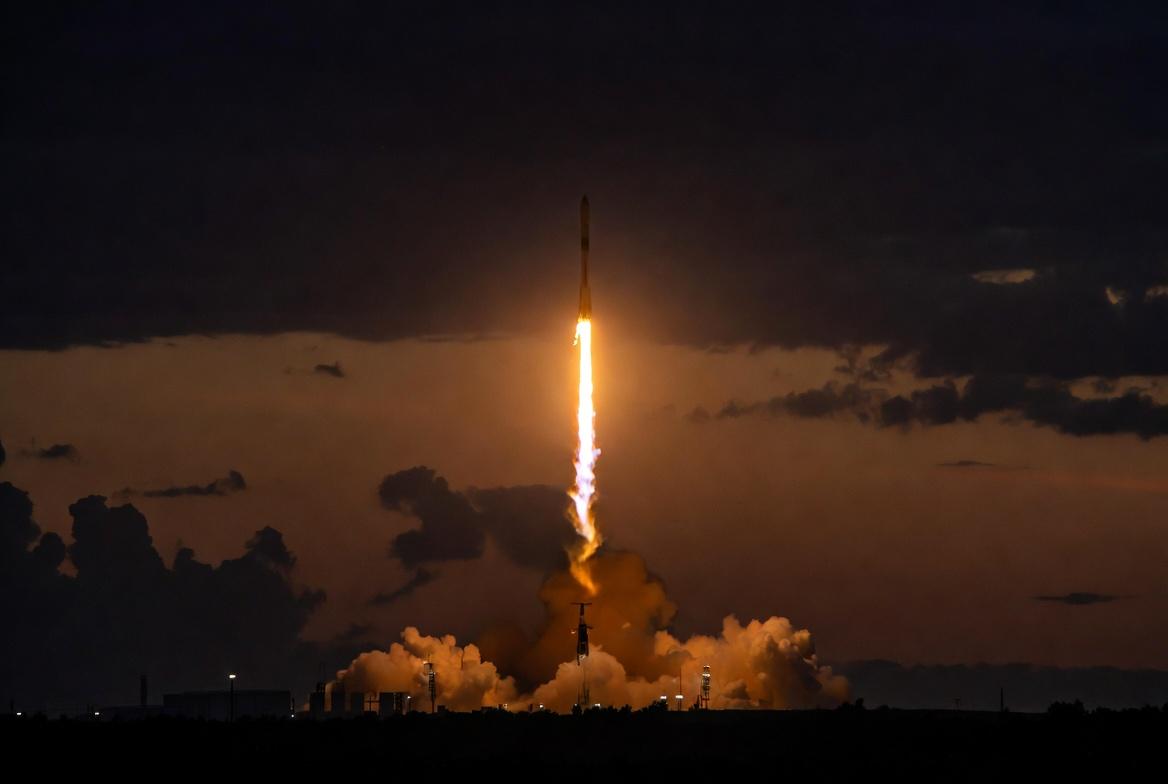
Between September 15 and 17, China completed four orbital launches within a 45-hour window. The missions utilized three different launch sites and four distinct rocket models, successfully deploying 30 satellites into orbit.
The LandSpace methane-fueled Zhuque-2E rocket launched from Jiuquan, delivering 10 satellites for the Qianfan broadband constellation. This network aims to reach a total of approximately 15,000 active units. Shortly after, the Orienspace Gravity-1, currently the world's most powerful solid-fuel rocket, deployed another 9 Qianfan satellites.
The state-owned Long March 12 launched from Wenchang, carrying 9 satellites for the SatNet system, which is planned to eventually consist of about 13,000 satellites. Finally, the Kuaizhou-11 rocket launched from Jiuquan, placing 2 radar remote sensing satellites for Spacety into orbit.
While none of the four recent missions involved stage recovery, China continues to test reusable technology. Over the past two and a half months, LandSpace successfully landed the first stage of a Zhuque-3 rocket, and the state-owned CASC achieved a similar milestone with the Long March 10B.