

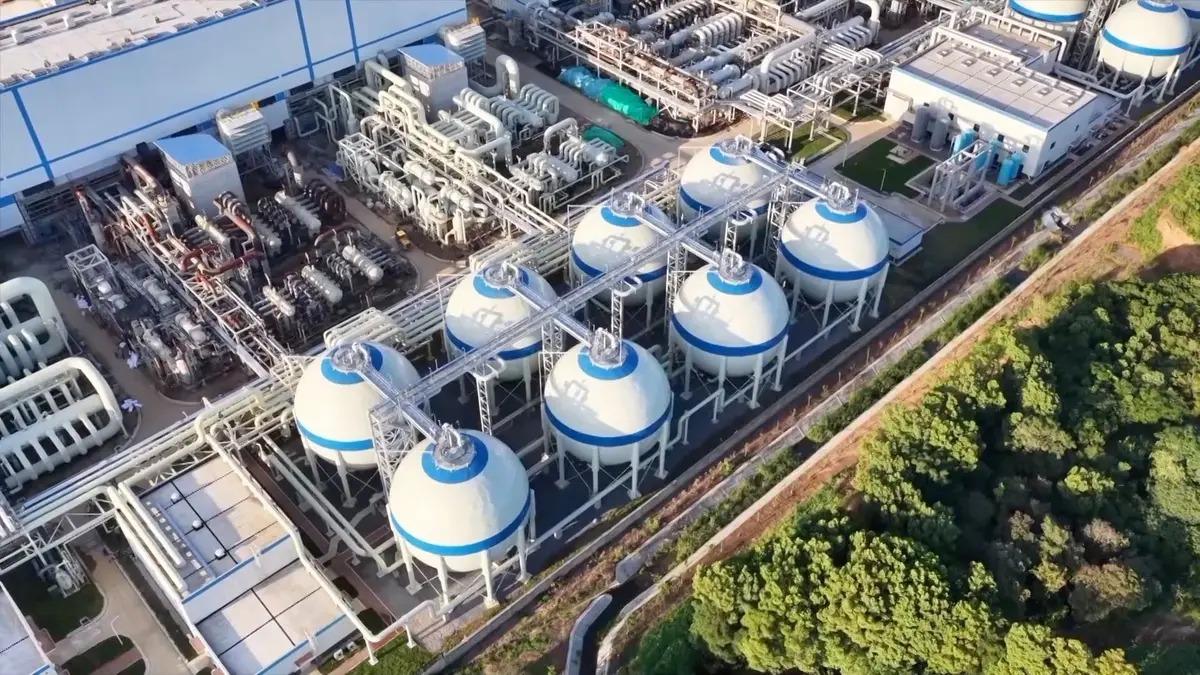
China has fully commissioned the second phase of the Huaneng Jintan compressed air energy storage facility in Jiangsu province. The project consists of two 350 MW units, providing a total capacity of 700 MW. The system utilizes underground salt caverns located at a depth of nearly 1 km to store compressed air at pressures exceeding 130 atmospheres, or approximately 9,000 kPa.
The facility operates by using excess electricity to power compressors when demand is low. When energy demand increases, the stored air is released to drive turbines for power generation. To improve efficiency, the system captures and stores heat generated during the compression process. This thermal storage setup includes 16 spherical water tanks with a total volume of 56,000 cubic meters.
The infrastructure features a primary injection and extraction well capable of handling airflow up to 2.16 million cubic meters per hour. The well is equipped with specialized anti-corrosion and leak-prevention technology. Salt formations were selected for the storage caverns due to their high density and low permeability, which ensure long-term containment of the pressurized air.
The project is managed by a centralized real-time control system that monitors both surface equipment and underground storage conditions. With an expected conversion efficiency exceeding 70 percent, the facility serves as a critical buffer for the power grid, allowing for the transfer of excess energy to periods of peak demand.



