

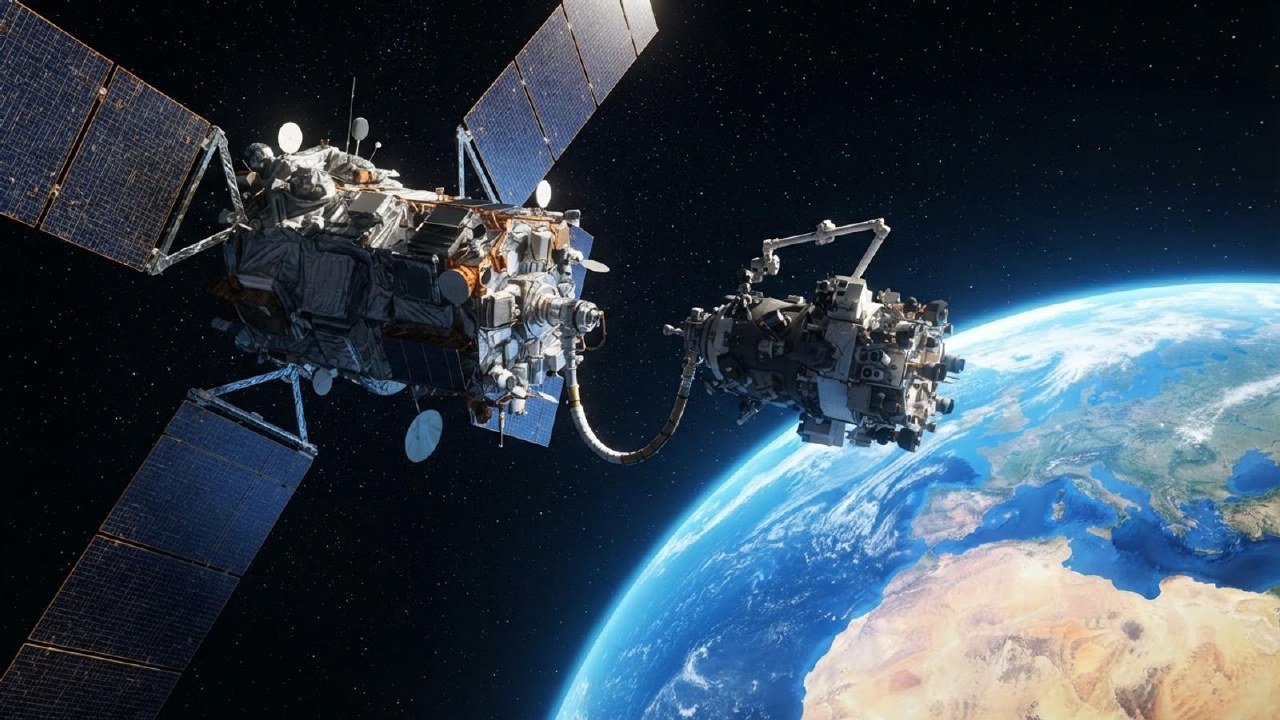
China successfully performed an orbital refueling operation involving a BeiDou navigation satellite. The mission took place in February, though details were disclosed only recently. A dedicated service spacecraft approached the target and transferred liquid propellant directly in orbit.
The experiment utilized long-term storable chemical fuel rather than cryogenic components. This approach avoids the need for complex cooling systems, as the fuel remains stable for years. The process requires the service craft to autonomously detect the target, match velocities, and execute a precise docking maneuver.
Refueling is essential for maintaining satellite operations, as propellant is consumed for trajectory corrections, orientation control, and collision avoidance. Even if electronic systems remain functional, a satellite becomes obsolete once its fuel is depleted. This technology aims to extend the operational lifespan of existing assets.
By enabling in-orbit refueling, operators can avoid the costs associated with launching replacement satellites. A single service vehicle could potentially support multiple spacecraft, offering a more efficient way to manage large orbital constellations. BeiDou is China's global navigation system, similar to GPS, Galileo, and GLONASS.



