

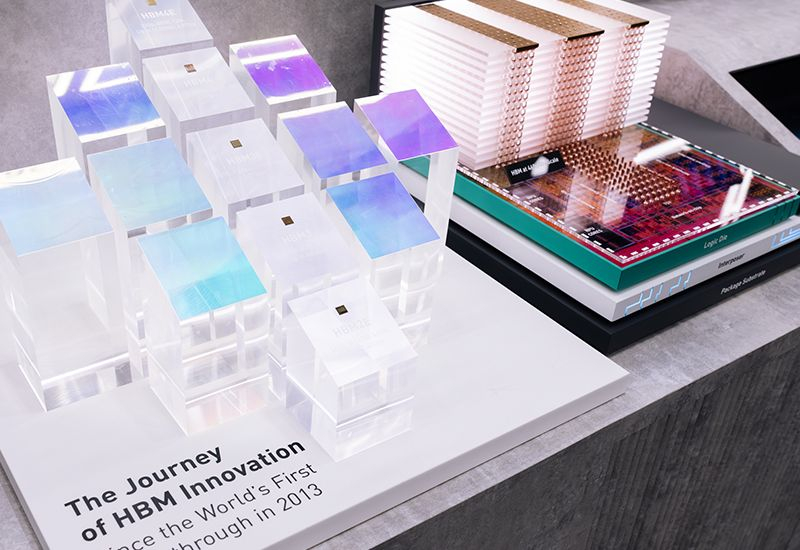
South Korean industry experts report that China has reduced its technological gap in HBM production to three years. In other memory segments, the lag is estimated at one to two years, with Chinese companies achieving in one year the progress that competitors typically reach in three.
Chinese manufacturer CXMT is reportedly testing HBM3E memory and aims to begin mass production next year. While the company currently produces HBM3, it faces challenges with HBM3E, as the yield rate is currently around 25 percent, significantly lower than the industry standard of 80 percent.
To overcome the lack of EUV lithography equipment, Chinese firms are focusing on advanced packaging. CXMT utilizes X-Stacking technology, while Huawei has proposed vertical chip integration methods to improve bandwidth and energy efficiency without relying on EUV scanners.
In the DRAM sector, CXMT has captured a 10 percent global market share, securing fourth place in revenue with an operating margin of 82 percent. The company recently raised nearly $10 billion through an IPO to fund the expansion of its production facilities.
The YMTC company holds a 14 percent share of the global NAND market and aims to become the industry leader by the end of next year. YMTC is currently producing 270-layer 3D NAND and plans to introduce 400-layer memory, potentially surpassing South Korean competitors.



