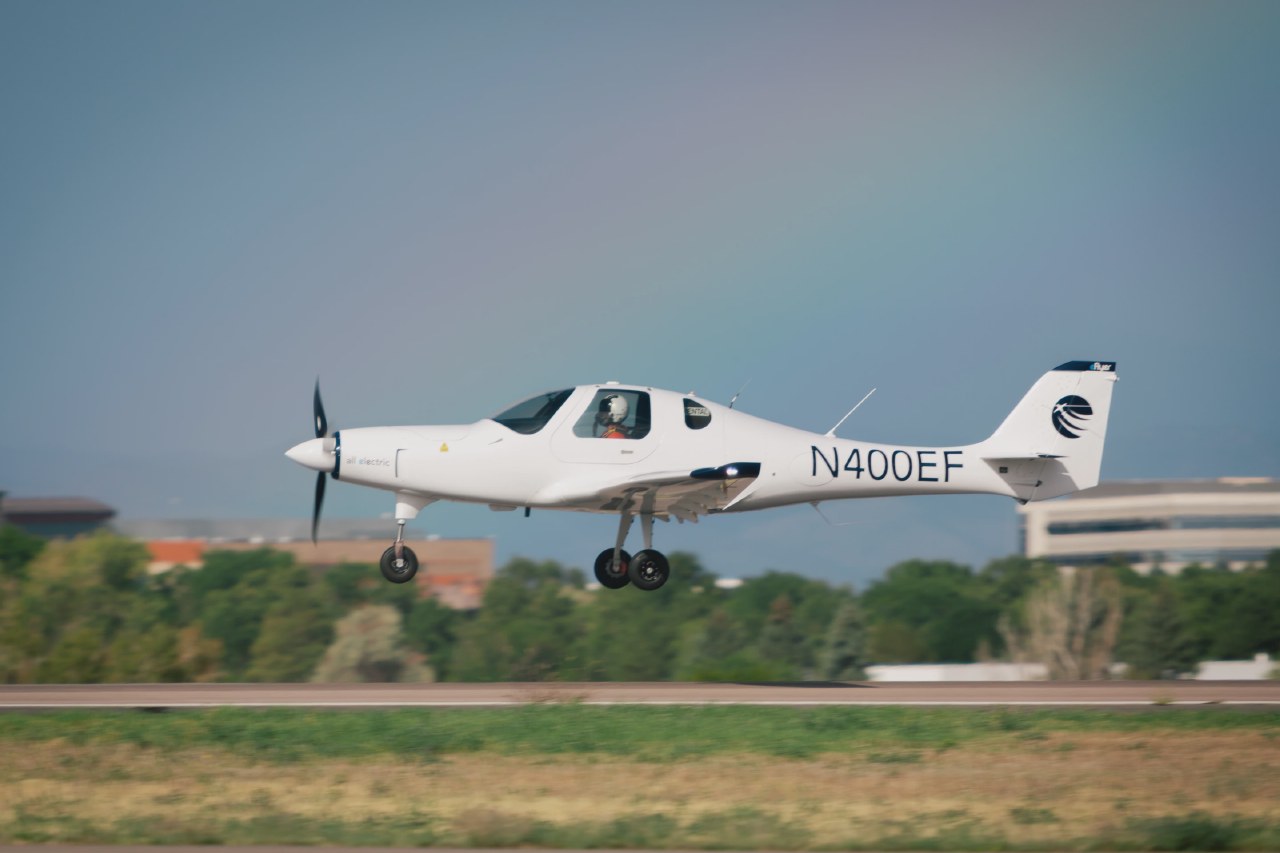
The eFlyer 2 electric trainer aircraft, developed by Bye Aerospace with support from BETA Technologies, has successfully completed its maiden flight. The test took place in Colorado, where the aircraft performed takeoff, flight, and landing maneuvers. The development team reported that the collected data met expectations, setting the stage for future airworthiness certification.
Designed specifically for pilot training, the two-seater eFlyer 2 utilizes a battery-powered electric propulsion system and a carbon fiber composite airframe. The developers highlight that the aircraft offers lower maintenance requirements compared to traditional piston-engine trainers, as the electric system contains fewer moving parts, potentially reducing operational downtime and costs.
The project targets the flight training sector, which the team identifies as an ideal use case for current battery technology due to short mission durations and proximity to airports. Beyond zero emissions, the aircraft produces significantly less noise than conventional fuel-powered trainers, which may help mitigate noise complaints from communities surrounding airfields.
The electric propulsion system provides immediate torque, improving responsiveness during takeoff and climb, while the absence of engine vibration ensures a smoother flight experience. As the aviation industry faces increasing pressure to reduce emissions, Bye Aerospace aims to provide flight schools with a more economical and environmentally friendly alternative to traditional models like the Cessna 172.
Following the successful first flight, the eFlyer 2 will undergo intensive testing to evaluate performance under various environmental conditions. The company is also working on larger models within the eFlyer series to expand electric aviation into broader commercial sectors, though the training market remains the primary focus for initial adoption.