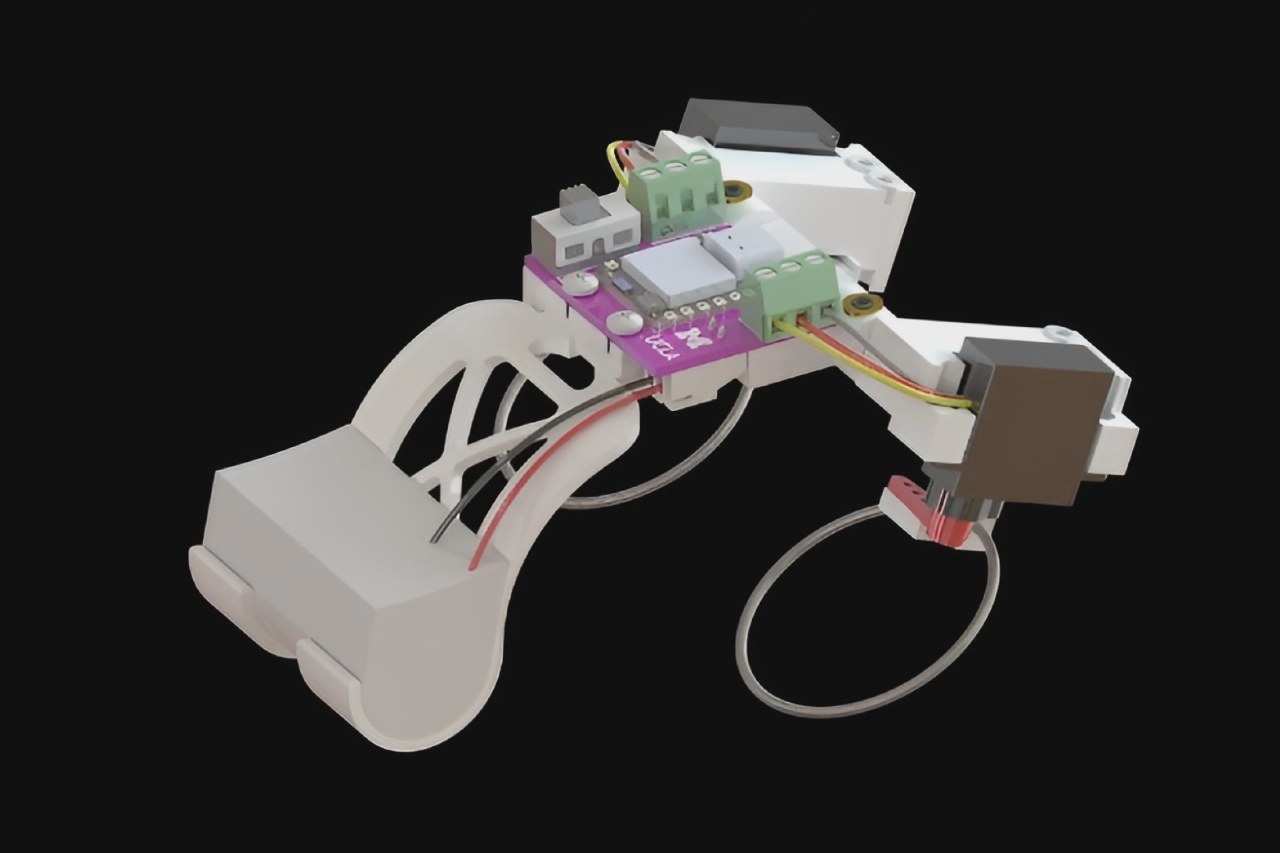
Researchers from UCLA and the University of Michigan have developed a bio-inspired micro-robot that mimics frog-like jumping. The device uses nickel-titanium alloy elastic rods to store energy via motor-driven torsion and bending, releasing it through sudden material deformation to generate thrust.
The prototype measures approximately 11 cm in length and weighs 98.2 grams. In comparative tests across six surfaces, including grass, sand, and wood, the jumping robot achieved an average speed of 2.46 body lengths per second, outperforming a rigid-legged control robot that averaged 0.79 body lengths per second.
Beyond jumping, the robot can traverse small steps, perform backflips, and navigate through obstacles. By attaching soft fins, the device can also swim at a speed of approximately 0.5 body lengths per second. The team demonstrated basic autonomous navigation using light sensors.
The study, published in Science Advances, suggests this mechanism could be applied to search-and-rescue missions or equipment inspections in complex environments. The design aims to reduce reliance on large motors by utilizing mechanical structures to accumulate and release energy efficiently.