

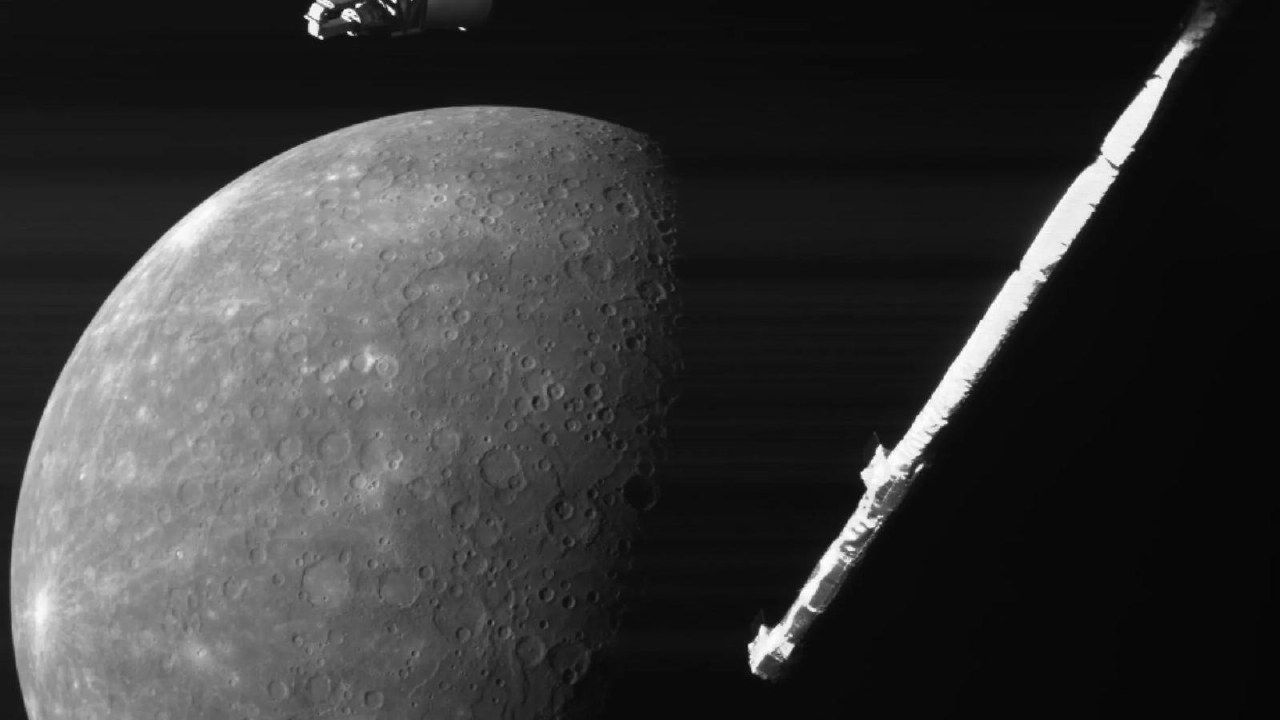
The BepiColombo mission, a joint project between ESA and JAXA, conducted its fourth flyby of Mercury on September 4, 2024. During this maneuver, the spacecraft passed 165 kilometers from the planet's surface while a solar particle event occurred.
The SIXS instrument, developed by the University of Helsinki, captured high-energy particles penetrating Mercury's magnetosphere and striking the surface. This impact generated X-ray emissions, which were documented in the journal Nature Astronomy.
Researchers utilized these observations to model extreme space weather conditions. The findings help assess how intense proton radiation might affect Earth's magnetosphere and atmosphere during severe solar storms.
Data from the mission will support the Center of Excellence in Space Resilience program. This initiative aims to protect commercial and scientific infrastructure in low Earth orbit from potential damage caused by space weather.
BepiColombo has completed six gravity-assist maneuvers since its launch eight years ago. In September 2026, the Mercury Planetary Orbiter and Mercury Magnetospheric Orbiter separated from the transport module to begin their orbital insertion.



