

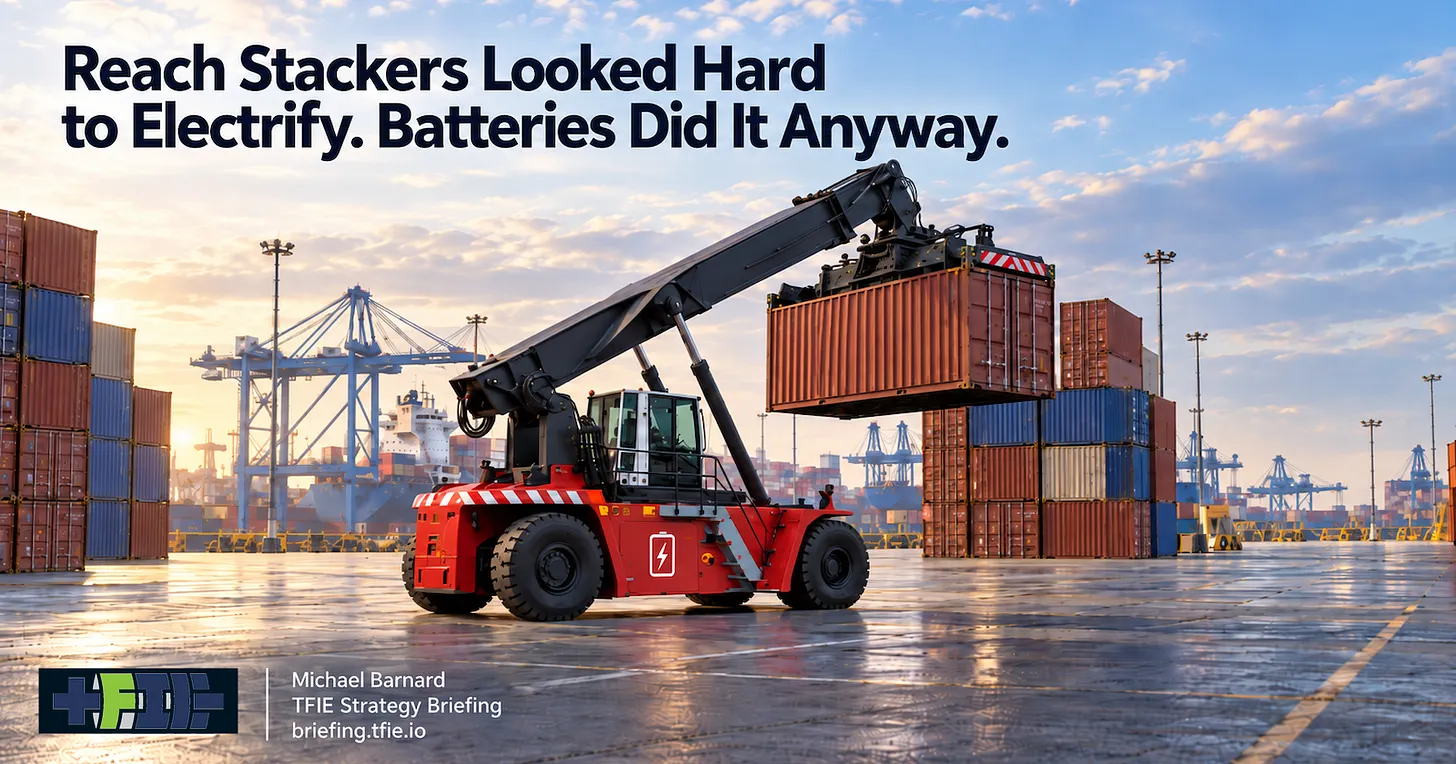
The global fleet of battery-electric reach stackers is estimated at approximately 1,500 units, representing 15% to 16% of the total 9,300 machines worldwide. Electric models currently account for nearly one-fifth of new production as ports shift away from diesel equipment.
Operational data from Reliance Transport shows that a 74-tonne SANY electric reach stacker consumes 33 kWh per hour during an eight-hour shift, handling about 100 container moves. These machines utilize battery packs of around 500 kWh or rely on high-power charging during scheduled breaks.
Economic analysis indicates a shift in total cost of ownership. While a 2023 study estimated electric stackers were 15% more expensive than diesel, current calculations from Kalmar suggest a 16% lower cost over five years in France. Reliance Transport reports 80% lower energy costs and 65% lower maintenance expenses.
Procurement trends show growing adoption through repeat orders. Westport ordered four additional units after testing one, Portonave is adding five, and Helsingborg has a framework for nine. APM Terminals plans to acquire or retrofit roughly 500 electric reach stackers over the next decade.
Hydrogen-powered prototypes, such as those tested in Valencia and Tilbury, have not yet resulted in fleet-scale orders. Unlike battery-electric units, hydrogen trials have not demonstrated a consistent pattern of repeat commercial investment in the reach stacker sector.



