

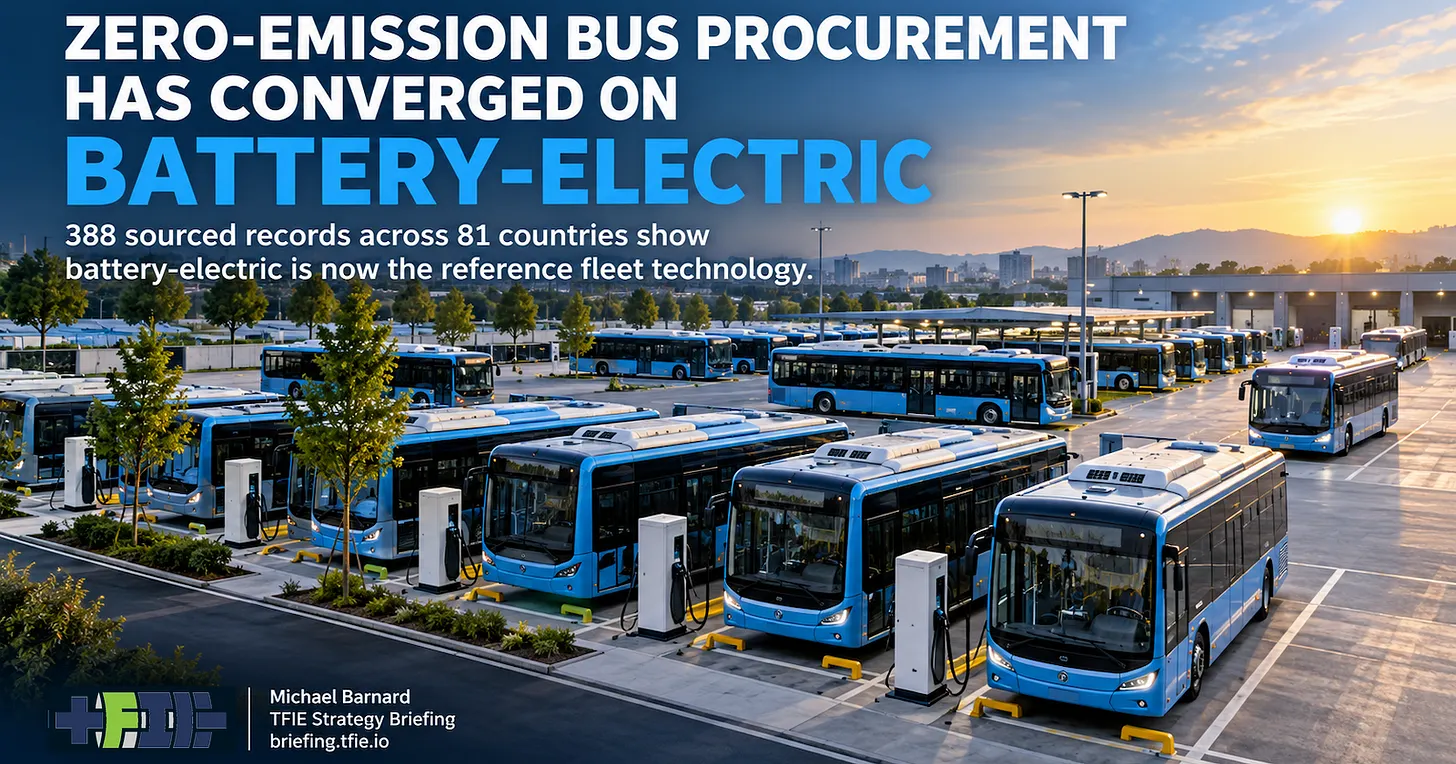
A global procurement analysis of zero-emission buses reveals a significant market preference for battery-electric technology over hydrogen fuel cells. Data from 388 records across 81 countries show that transit agencies are prioritizing battery-electric models for fleet-scale operations.
The procurement register tracks 13,165 firm orders for battery-electric buses compared to only 65 for hydrogen fuel-cell vehicles. While battery-electric orders originate from 55 distinct purchasing bodies, the hydrogen orders are limited to just two entities.
The current market split indicates that battery-electric buses account for approximately 99.5% of all confirmed acquisitions. This ratio represents more than 200 battery-electric units purchased for every single hydrogen bus, with the forward procurement pipeline showing a similar trend.
Hydrogen bus adoption remains concentrated in specific municipal projects, such as those in Qingyang, China, and Krefeld, Germany. These cases demonstrate that while hydrogen can function under specific conditions, it lacks the broad, multi-regional replication seen with battery-electric fleets.
The report suggests that battery-electric technology should now serve as the default standard for urban and suburban transit. Future policy and infrastructure efforts should focus on addressing deployment challenges like grid capacity, depot power, and charging reliability.



