

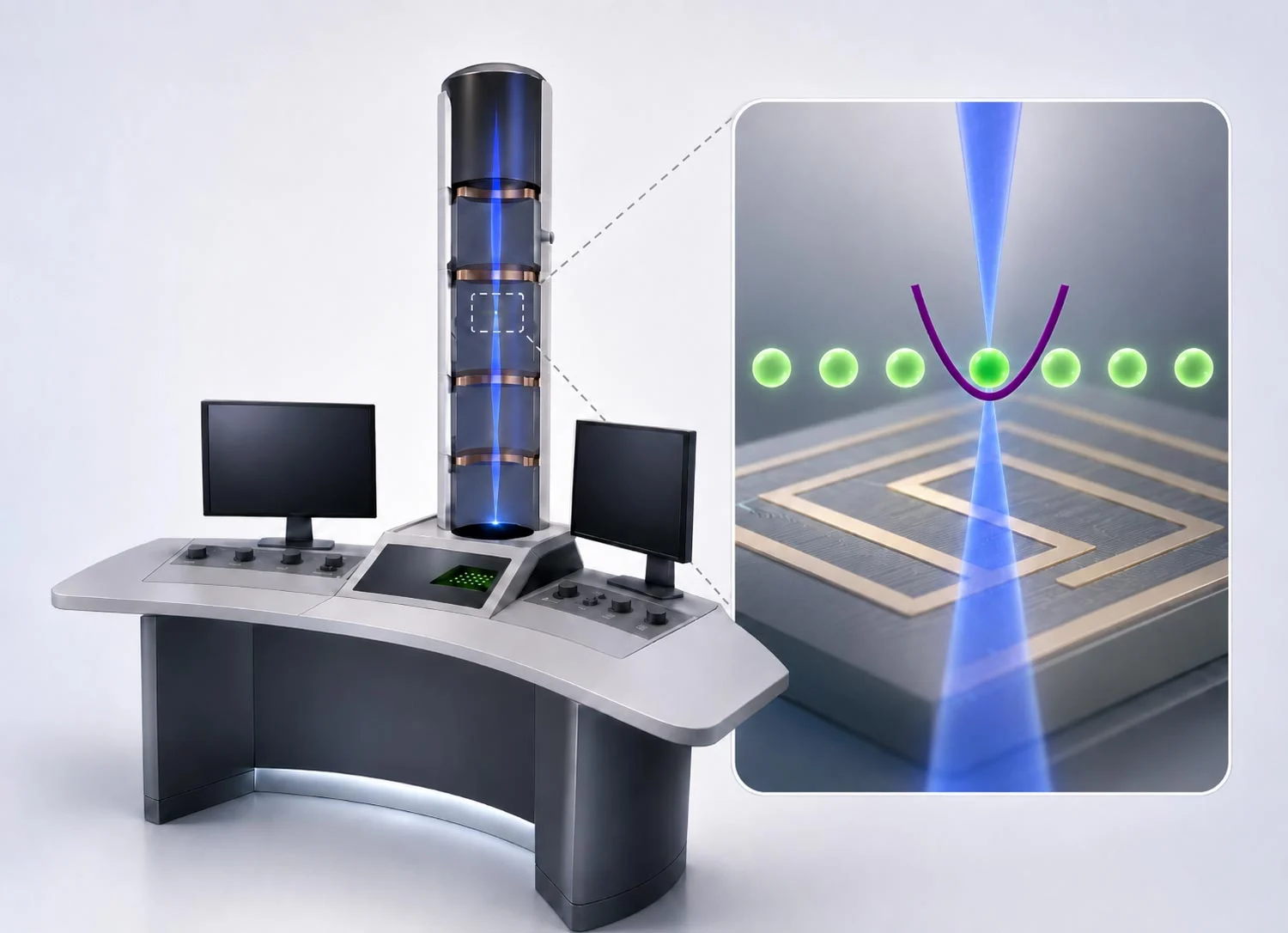
Researchers from Vienna University of Technology, the University of Vienna, Johannes Kepler University Linz, and the University of Innsbruck are developing a technology that integrates ion-trap quantum computers into electron microscopes. The project aims to improve imaging clarity while reducing radiation damage to fragile biological samples.
Traditional microscopy faces a trade-off between image quality and sample preservation. Increasing electron dosage improves contrast but destroys sensitive materials like proteins, while lowering the dose results in high noise. Current systems treat electrons as simple particles, ignoring the quantum information they carry.
The new mechanism uses controlled interactions to entangle electrons passing through the sample with trapped ions. The quantum computer then processes this information using specialized algorithms to reconstruct high-contrast images from weak signals. This approach bypasses the statistical limits of classical measurements.
The team is currently building and testing a prototype at the University Service Center for Transmission Electron Microscopy at the Vienna University of Technology. The setup combines ion-based quantum hardware from the University of Innsbruck with a transmission electron microscope to validate the theoretical model.

