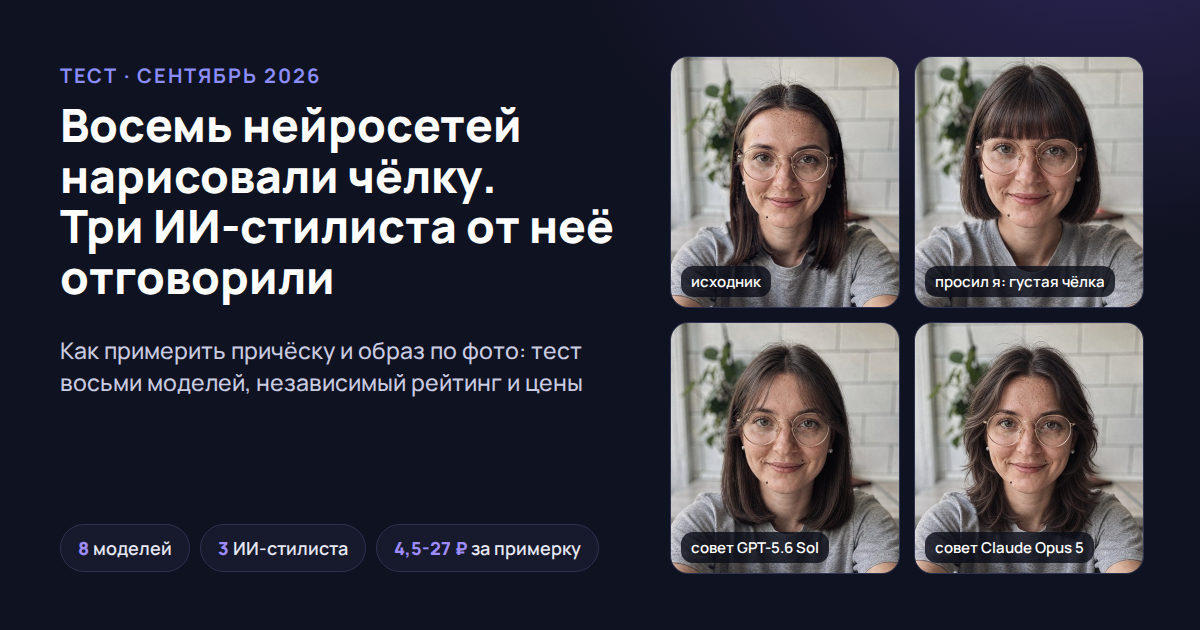
In September 2026, an experiment tested eight image-generating AI models to apply a specific hairstyle to a portrait. While all models successfully rendered the requested look, subsequent analysis by three AI stylists advised against the style, noting that the bangs interfered with the subject's glasses. This highlights the distinction between generative models, which follow instructions literally, and analytical models used for consultation.
The process involves two stages: using a language model like Claude, GPT, or Gemini for advice, followed by an image editing model for visualization. Each editing task takes between 10 and 45 seconds, with costs ranging from 4.5 ₽ to 27 ₽ per attempt. The tests were conducted via the BotHub aggregator, which supports payments in rubles.
Among the models tested, gpt-image-2.5 proved the most cost-effective at 6 ₽ per result, providing four variations while maintaining facial features. Nano Banana Pro delivered similar quality but at a significantly higher price point. Conversely, Qwen Image Edit Plus performed poorly, altering facial features and clothing during the editing process.
The gpt-image-2.5 model also secured the top two spots in the Artificial Analysis independent ranking, which evaluates models based on human blind tests. Despite these capabilities, AI assessments of facial shapes remain subjective. A 2025 study showed that human experts often struggle to reach a consensus on facial classification, with results barely exceeding random chance.