

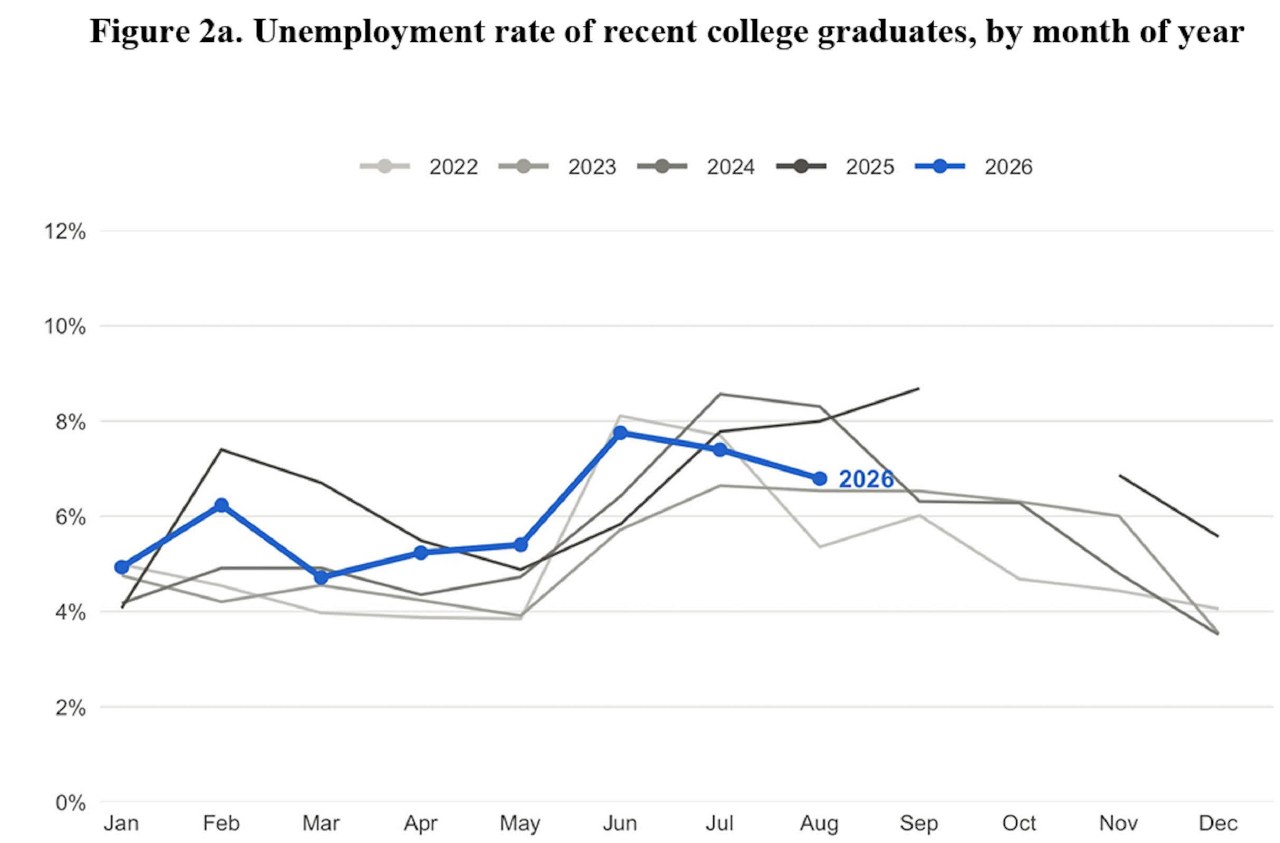
A recent report from the CESifo Institute in Munich analyzed the impact of generative AI on the US labor market for college graduates aged 22 to 25. The study utilized microdata from the US Census Bureau's Current Population Survey, covering the period from 2022 to the summer of 2026.
Data indicates that the unemployment rate for this demographic reached 7.3 percent in the summer of 2026. While this figure is higher than the 6.3 percent recorded in 2022, it remains within the normal fluctuation range of the past four years and is lower than the 7.8 percent peak observed in 2024.
Researchers Robert Fairlie and Jane Wu concluded that there is currently no clear evidence of a systemic negative impact on entry-level job opportunities caused by AI. The analysis included individuals who are not actively seeking work, yet no significant deterioration in employment trends was identified.
Despite these findings, the report notes that the long-term effects of AI remain uncertain. While entry-level tasks such as document summarization and basic analysis are increasingly handled by AI, the study emphasizes that future developments in technology and business integration require further observation.



