Host Stars Define the Evolutionary Path of Planetary Systems
Researchers have identified two distinct types of planetary systems in the Milky Way, with the host star's properties determining their evolutionary fate and stability.

Researchers have identified two distinct types of planetary systems in the Milky Way, with the host star's properties determining their evolutionary fate and stability.

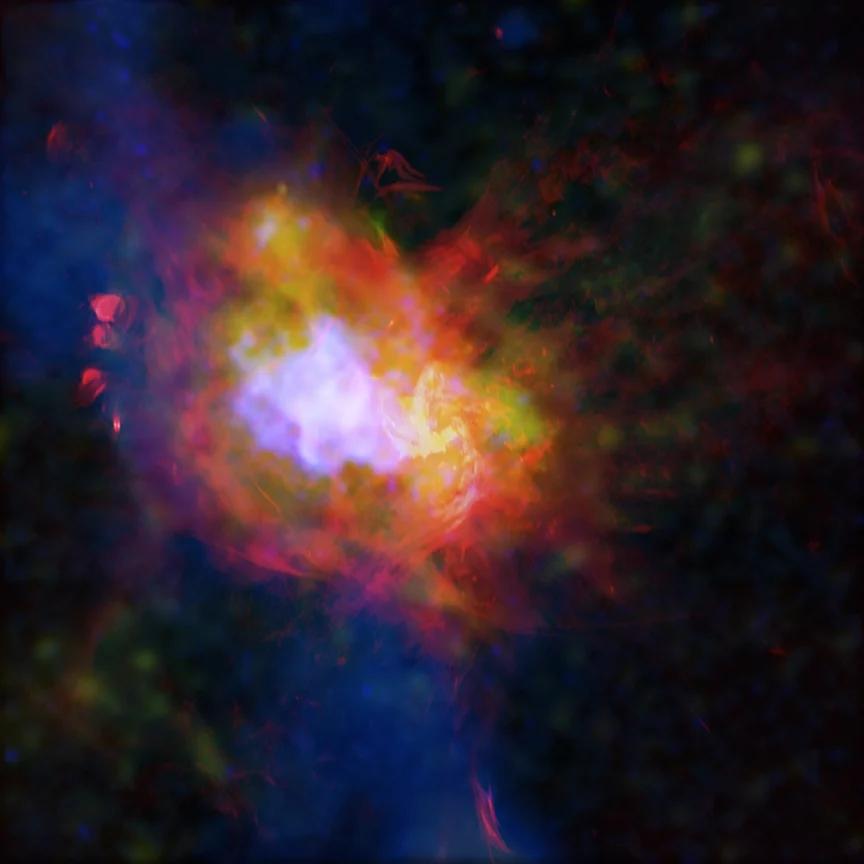
The Chandra X-ray Observatory has mapped the Milky Way's center, revealing how a 10,000-year-old supernova remnant reshaped the environment around the central black hole.

A new mathematical model suggests that standard supernovae, rather than hypernovae, may explain the unusual chemical composition of ancient stars in the Milky Way.

Researchers have completed the Megatron project, a three-year supercomputer simulation detailing the early evolution of the Milky Way and the origins of iron distribution in dwarf galaxies.

Researchers have utilized three years of supercomputer calculations to create the most detailed model of the early Milky Way's evolution, covering two billion years of cosmic history.

Researchers are developing a new method to map dark matter in the Milky Way by utilizing Earth's orbital motion to detect directional signals from the galaxy's dark matter halo.

Astronomers have discovered S301, the fastest star ever observed orbiting the supermassive black hole Sagittarius A* at the center of the Milky Way.