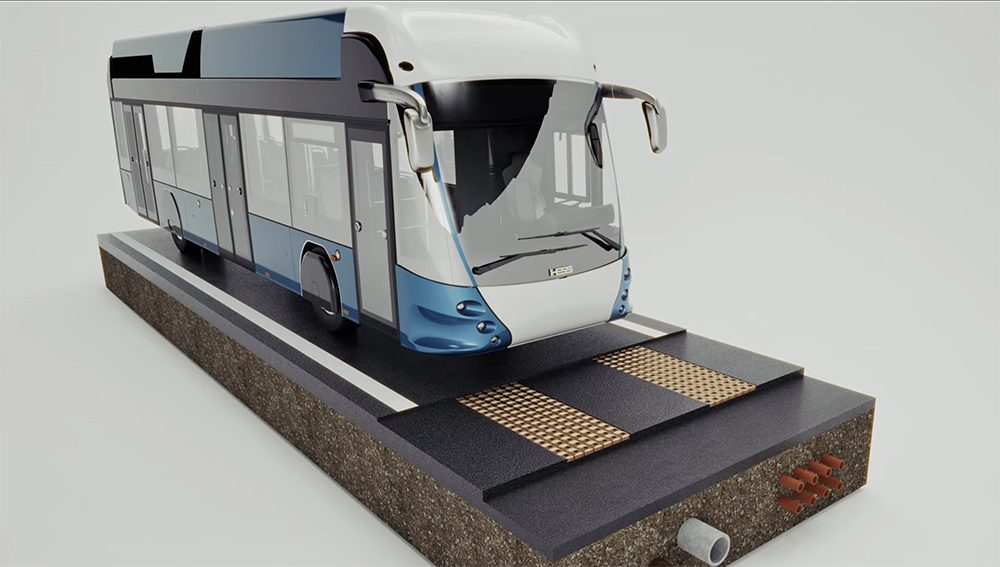
Swiss startup Winduction, a spin-off from ETH Zurich, has developed an inductive charging system for electric buses that transfers energy through the tires. The system utilizes induction coils embedded in road plates and corresponding coils integrated into specially designed steel-free bus tires. This configuration minimizes the transmission distance between the road and the vehicle, achieving an energy transfer efficiency of over 90 percent.
The technology aims to allow bus operators to use smaller battery packs, reducing both purchase and operating costs. By charging during short stops along a route, the system reduces the need for overnight depot charging. On a test route between Zurich Airport and the Oerlikon quarter, the company calculated that charging would be required at only 2 of 24 stops for a total of 3 hours, compared to the current 5-hour overnight garage charging requirement.
Winduction is currently establishing testing infrastructure in Winterthur, including a laboratory and a test bus stop. The company is collaborating with partners to manufacture the necessary steel-free tires to avoid magnetic field interference. The startup is in discussions with several Swiss transport operators and plans to launch its first pilot project in 2028.
The founders intend to integrate all components into an industry-ready format. The next development phase focuses on creating a fully converted electric bus capable of operating outside of the company's private testing area. This approach seeks to optimize fleet electrification by enabling regular, efficient charging during active operation.