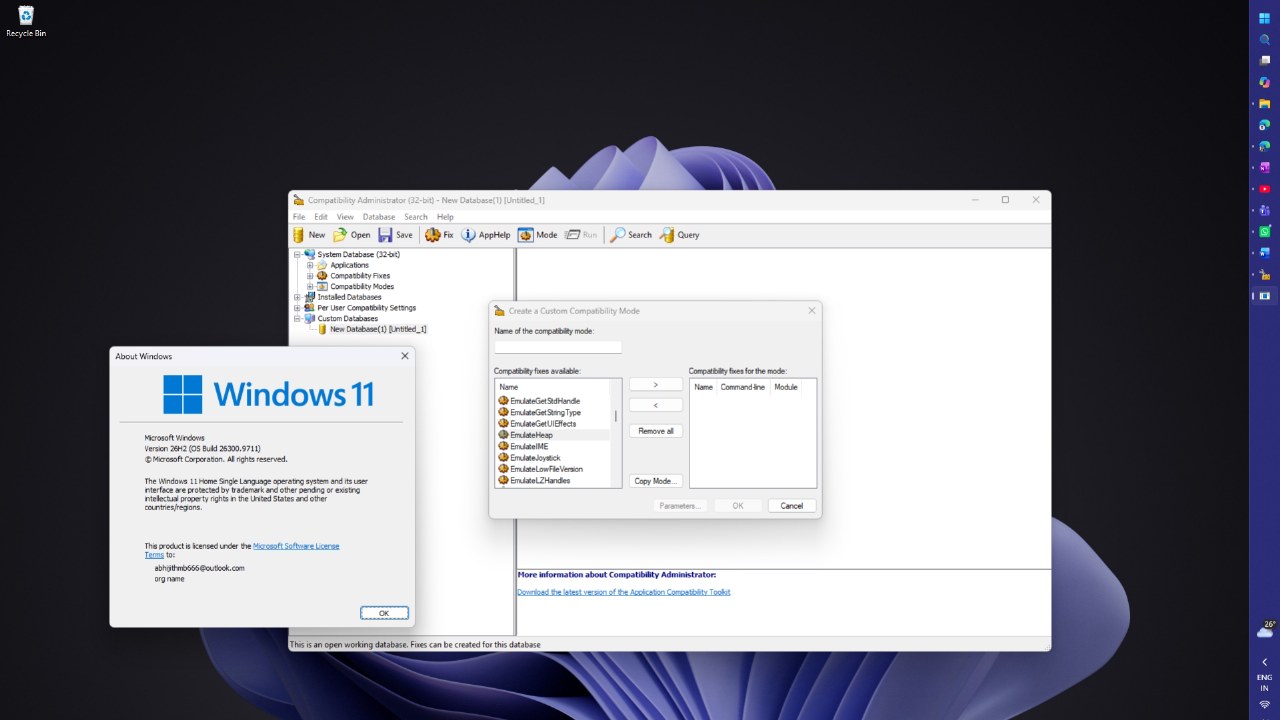
Windows 11, specifically version 26H2, retains legacy code from the Windows 95 era within its application compatibility framework. This includes a mechanism known as EmulateHeap, which allows certain older programs to function by mimicking the memory management behavior of the 1995 operating system.
The origin of this approach dates back to the development of Windows 95, when Microsoft chose to modify the OS to accommodate a memory management error in the game SimCity rather than requiring the developer to fix the code. This strategy evolved into a systematic compatibility layer to prevent crashes in legacy software that relies on outdated memory allocation patterns.
EmulateHeap is not active by default for all applications. It functions as an on-demand compatibility fix that intercepts memory-related system calls, such as HeapCreate and GlobalReAlloc. Users can inspect these compatibility settings using the Compatibility Administrator tool, which is part of the Windows Assessment and Deployment Kit (Windows ADK).
Maintaining such legacy code involves a trade-off between system complexity and software longevity. While it enables older enterprise tools and applications to run on modern hardware, it does not guarantee compatibility for all legacy software, as evidenced by past issues where specific fixes caused conflicts in games like Grand Theft Auto: Vice City.