

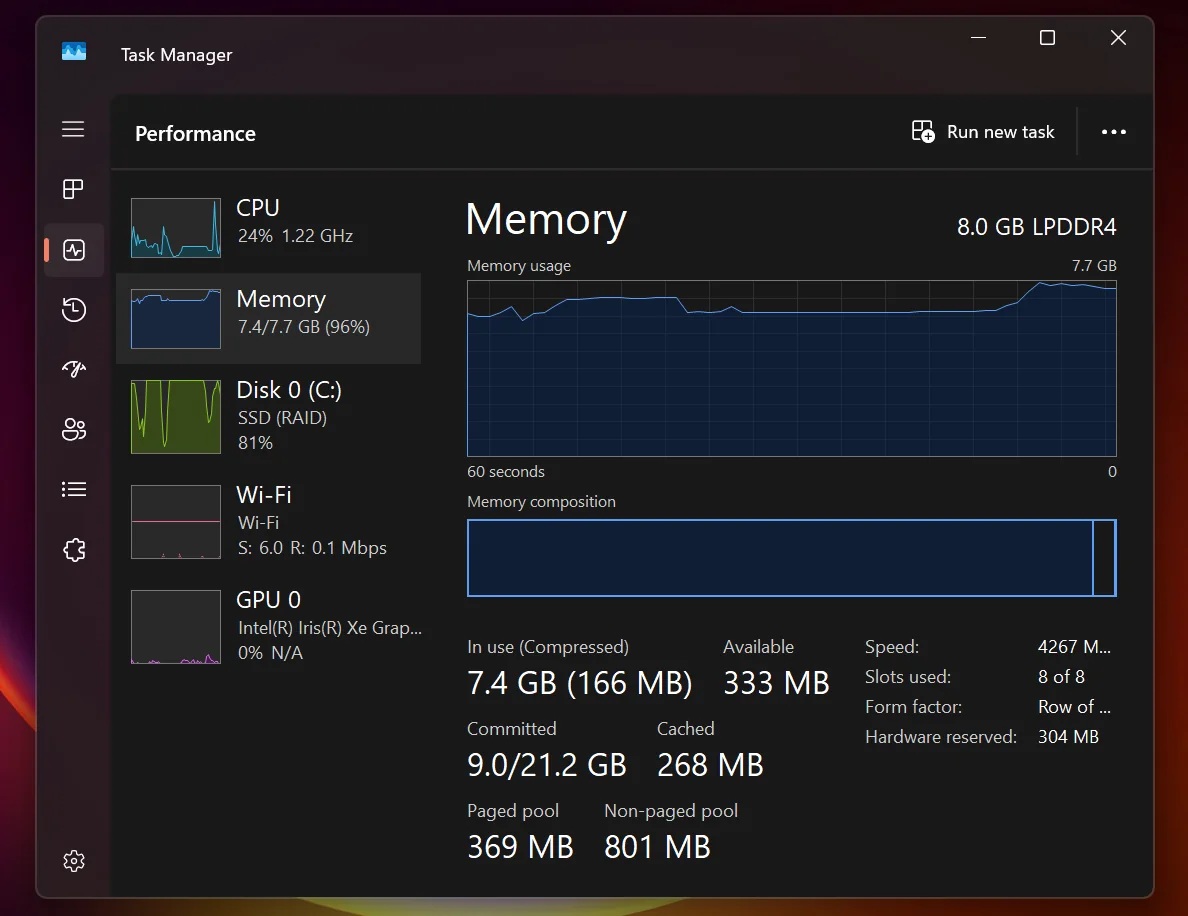
Microsoft has begun rolling out the Windows 11 26H2 update globally. Early user reports indicate that the new version reduces memory usage when the system is idle, though the impact varies significantly depending on the hardware configuration.
Users with high-end systems report notable improvements. One user with 48GB of RAM observed a reduction in memory consumption of approximately 2GB after booting. Another user with 32GB of RAM reported a decrease in system memory usage from 9.1GB to 7.5GB.
In contrast, devices with 8GB of RAM show little to no improvement. Reports indicate that such systems still utilize about 7.4GB of memory upon startup, leaving only 4% of total capacity available for applications. This remains a challenge for users running browsers or office software.
Pavan Davuluri, head of the Windows and Devices division, previously stated that reducing memory footprint is a priority. The company aims to improve efficiency for 8GB devices by optimizing the WinUI framework, Chromium, and WebView2 components.



