

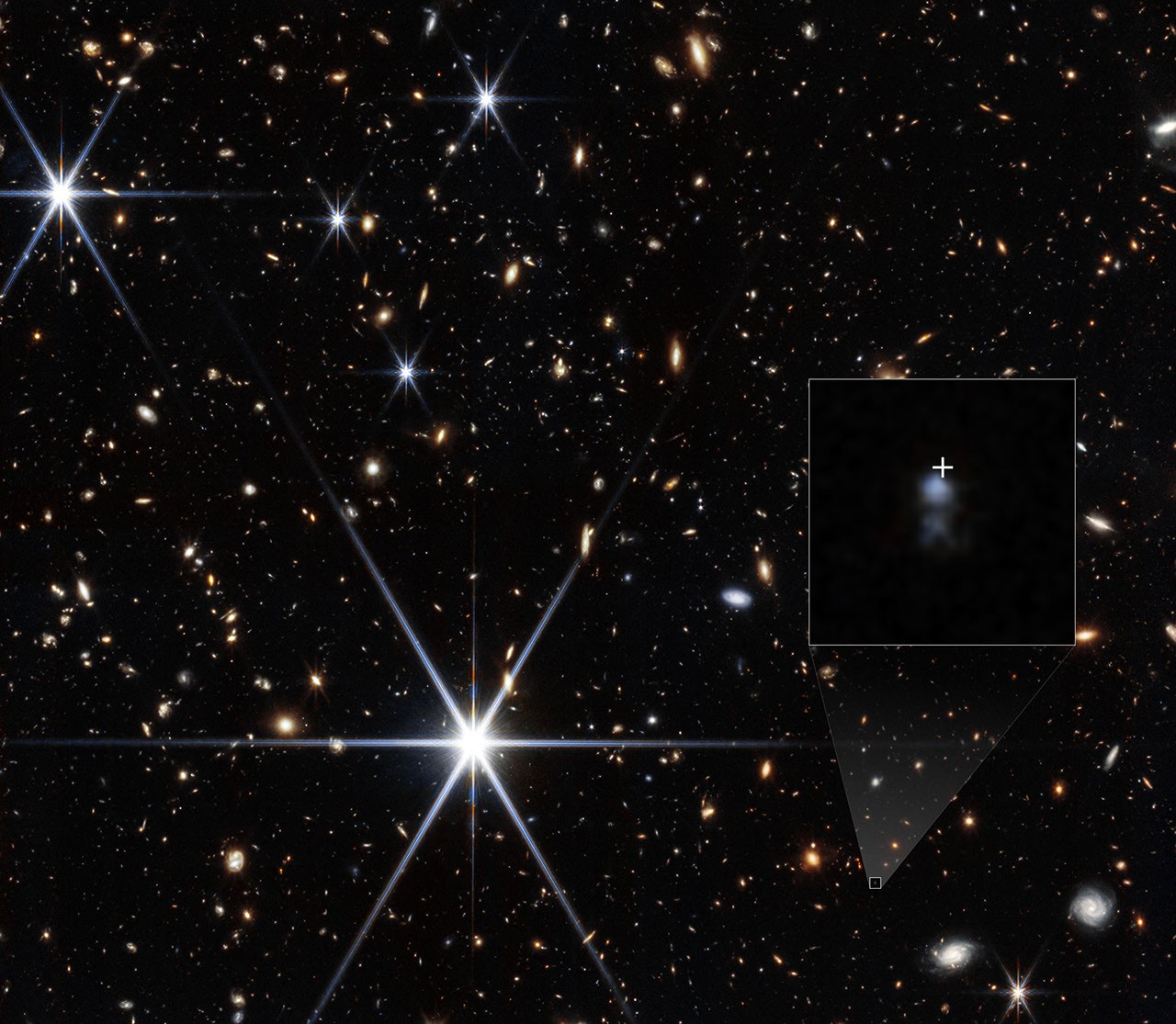
Astronomers have identified the host galaxy of the most distant fast radio burst (FRB) detected to date, designated as FRB 20240304B. The burst was initially discovered on March 4, 2024, by the MeerTRAP team using the MeerKAT telescope.
Data from the James Webb Space Telescope’s NIRSpec instrument measured the galaxy’s redshift at 2.148, placing the event approximately 3 billion years after the Big Bang. The host is a small, actively star-forming dwarf galaxy, 1,000 times less massive than expected.
The findings challenge the theory that FRBs originate from neutron star mergers, which typically occur in older, more massive galaxies. Instead, the results support the hypothesis that FRBs may be produced by young, highly magnetic neutron stars known as magnetars.
The FRB signal also provided data on cosmic structures, revealing a previously unknown galaxy cluster at a redshift of 0.3 and the Virgo Cluster located 54 million light-years away. Researchers estimate that MeerKAT could detect several such distant FRBs annually.



